Muscle loss in old age (sarcopenia): causes, signs and what really helps
The stairs feel steeper than they used to, the crate of drinks heavier, and getting up from the low sofa suddenly takes momentum. Many people notice these small signals from 50 or 60 onwards and put them down to age. Behind them there is often a very specific process: the gradual loss of muscle mass and muscle strength, known in medicine as sarcopenia.
At FITVYR® we see every day how present this topic is. Many of our customers buy a smart home gym for exactly this reason: they want to do something about muscle loss, often on the recommendation of their doctor or physiotherapist, sometimes after a fall or a longer illness, and increasingly simply because they are aware that strong muscles are the key to an independent life.
The good news first: muscle loss in old age is not inevitable. It can be slowed down considerably and in many cases even reversed. In this guide you will find out why muscles decline over the years, how to recognise it, which measures have been shown to work and what a safe training plan for home looks like.
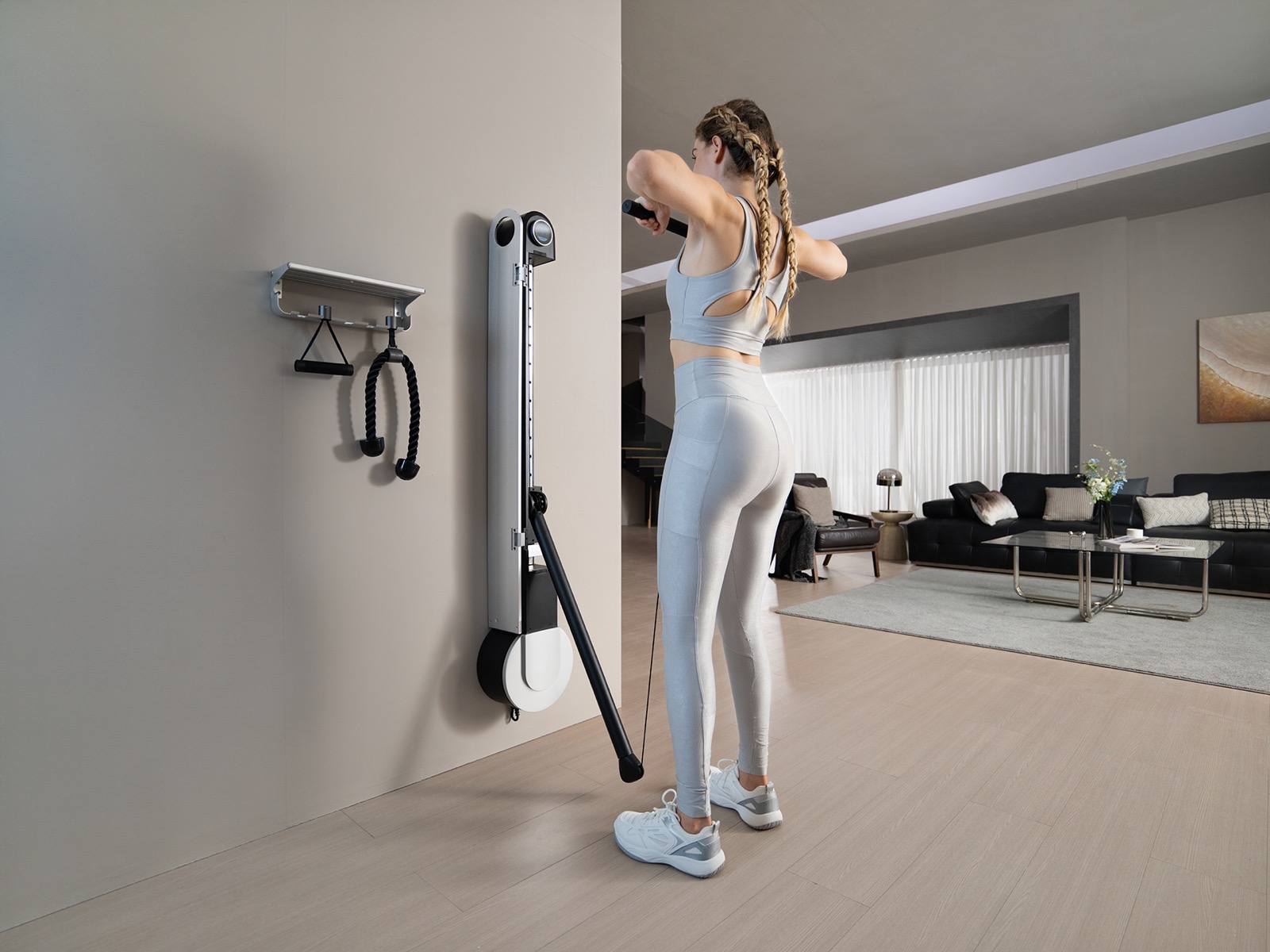
What is sarcopenia?
Sarcopenia is the progressive loss of muscle mass, muscle strength and physical performance in old age. For a long time this was regarded as a normal sign of ageing. Today, sarcopenia is considered a muscle disease in its own right; since 2016 it has even had its own diagnosis code (M62.84) in the US version of the international classification ICD-10.
The European Working Group on Sarcopenia in Older People (EWGSOP2) revised its definition in 2019. Since then, muscle strength has been the main criterion. If it is too low, sarcopenia is suspected. This is confirmed by reduced muscle mass. If physical performance is also impaired, for example a markedly slower walking pace, this is referred to as severe sarcopenia.
This must be distinguished from muscle diseases with other causes, such as neurological conditions. If muscle strength declines suddenly, on one side only or very quickly, this should always be seen by a doctor.
How quickly do muscles decline in old age?
Muscle loss starts earlier than most people think. According to common estimates, untrained people lose 3 to 8 per cent of their muscle mass per decade from around the age of 30. From 60, the process often accelerates. Strength usually declines even faster than mass, because the nerves' control of the muscles also weakens and the fast, powerful muscle fibres in particular shrink.
This becomes particularly clear during periods without exercise. In a study in the journal JAMA (Kortebein et al., 2007), healthy older adults lost almost one kilogram of leg muscle mass after just ten days of bed rest. So if you are hardly active for a few weeks after an operation, a cold with fever or a fall, you can lose a lot in a short time, and then have to rebuild it with considerable effort.
The most important causes
- Lack of exercise: The biggest factor and at the same time the one you can influence most. The body breaks down muscles that are not challenged.
- Anabolic resistance: Older muscles respond more weakly to protein and training stimuli. They therefore need a stronger impulse to build muscle protein.
- Hormonal changes: Over the years, testosterone and oestrogen levels, among others, decrease. In women, muscle loss often accelerates after the menopause.
- Too little protein: Many older people eat less, and protein in particular is often lacking.
- Nervous system: With age, motor nerve cells are lost. As a result, fewer muscle fibres are activated.
- Illness and inflammation: Chronic diseases, silent inflammatory processes and some medications can accelerate the loss.
Signs and simple self-tests
Sarcopenia develops gradually. Typical signs in everyday life are:
- Climbing stairs becomes more strenuous and you hold on to the handrail more often.
- You can only get up from a chair with the help of your arms.
- Screw-top jars, bottles or heavy bags are harder to manage.
- You walk more slowly than you used to or feel less steady when walking.
- You have recently fallen or been afraid of falling.
- You have lost weight unintentionally, or your clothes fit more loosely on your arms and legs.
Three small tests give you a first impression:
1. The chair stand test
Sit on a normal chair, cross your arms over your chest and stand up and sit down again five times in a row as quickly as you safely can. If it takes you longer than 15 seconds, European experts regard this as an indication of too little leg strength.
2. Grip strength
Grip strength can be measured with a hand dynamometer, which many medical and physiotherapy practices have. According to EWGSOP2, values below 27 kilograms for men and below 16 kilograms for women are considered low.
3. The SARC-F questionnaire
This short questionnaire asks about five areas: how difficult do you find lifting and carrying about 4.5 kilograms, walking across a room, getting up from a chair or bed, climbing ten stairs, and how often have you fallen in the last year? Each question scores 0 to 2 points. A score of 4 points or more indicates suspected sarcopenia.
These tests do not replace a diagnosis. If you notice anything, talk to your GP. They can also rule out other causes.
Why muscle strength is so important in old age
Your muscles determine whether you stay independent as you get older. They carry you up the stairs, catch you when you stumble and protect your joints. They are an important consumer of blood sugar and therefore a partner against metabolic problems. And they provide the stimuli that keep bones stable.
How closely strength and health are linked is shown by the international PURE study with almost 140,000 participants (Leong et al., The Lancet, 2015): every 5 kilograms less grip strength was associated with a 16 per cent higher risk of death. So muscle strength is far more than a question of fitness. We describe in detail how strength, endurance and mobility together contribute to many healthy years in our guide Longevity training: how to stay healthy, strong and independent for longer.
What really helps: the five most effective measures
1. Strength training: by far the most important measure
No medication and no dietary supplement works as powerfully against muscle loss as targeted strength training. The professional societies agree on this, and research shows that muscles still respond surprisingly well even at a very old age.
A famous example dates from 1990. In a study in the journal JAMA, researchers led by Maria Fiatarone had care home residents aged between 86 and 96 train their leg muscles intensively for eight weeks. Their strength increased by an average of 174 per cent, their thigh muscles grew and their walking pace improved. So it is never too late.
For strength training to work, a few basic principles matter:
- Regularity: two to three sessions per week, with at least one rest day in between for the same muscle group.
- All major muscle groups: legs, glutes, back, chest, shoulders, arms and core.
- Sufficient intensity: choose a weight that allows you to complete 8 to 12 clean repetitions, with the last two being noticeably challenging. Training that is too light does not provide enough stimulus.
- Gradual progression: when an exercise becomes easy, increase the weight in small steps. This principle is called progressive overload and is the driving force behind muscle growth.
- Controlled lowering: The phase in which the muscle brakes is a particularly strong stimulus. Lower weights deliberately slowly.
- A little speed when lifting: More advanced users can perform the lifting phase briskly but under control. This trains power, which declines particularly sharply with age and is crucial for catching yourself when you stumble.
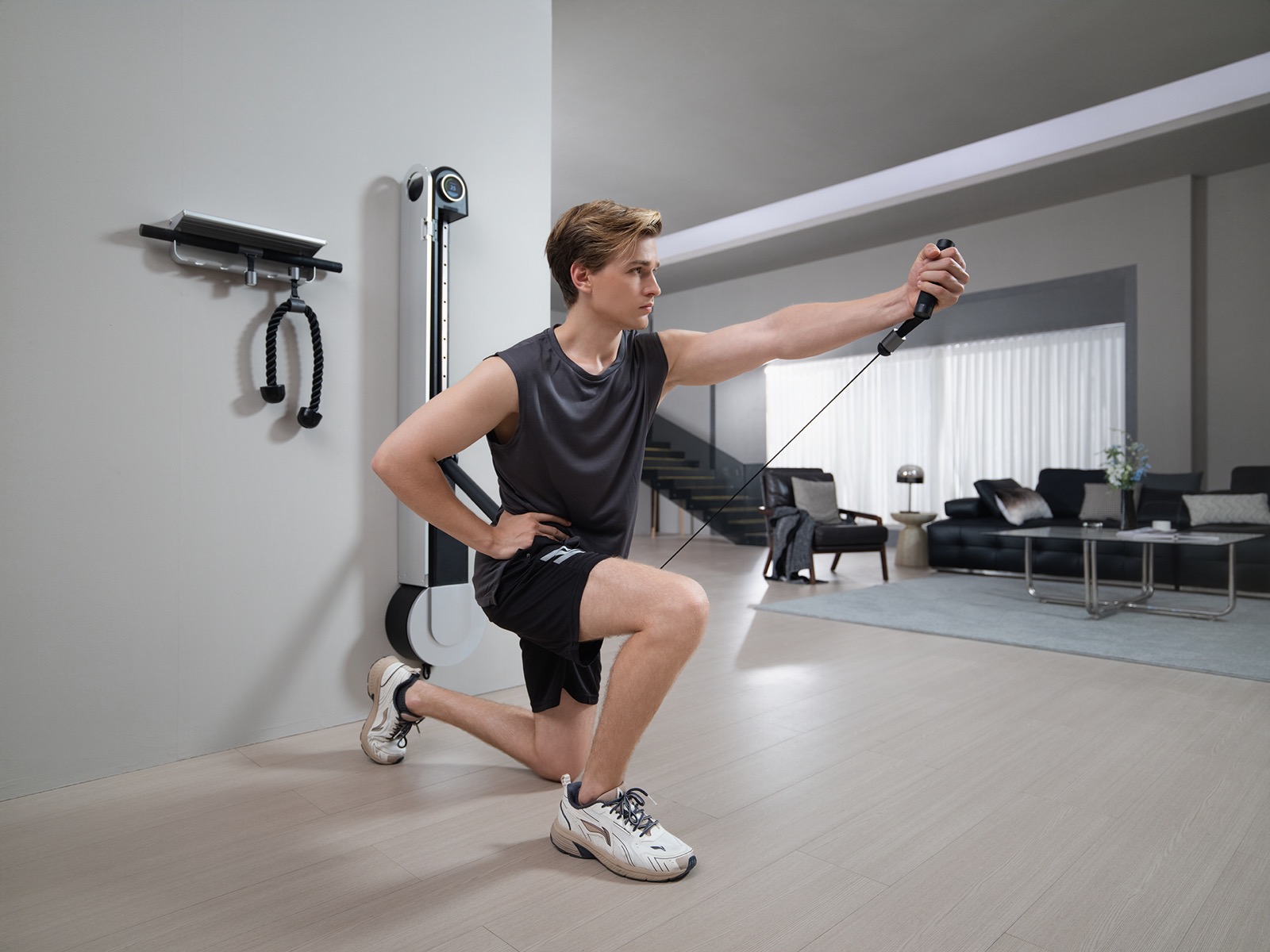
2. Enough protein, spread well over the day
Muscles consist largely of protein. Older people need more of it than many think. The German Nutrition Society (Deutsche Gesellschaft für Ernährung) recommends around 1.0 grams of protein per kilogram of body weight per day from the age of 65. International expert groups such as the PROT-AGE study group and the European society ESPEN state 1.0 to 1.2 grams for healthy older people, and more for physically active older people.
For a person weighing 75 kilograms, that is around 75 to 90 grams of protein a day. Because of anabolic resistance, the distribution matters: around 25 to 30 grams per main meal provides a better stimulus than one large portion in the evening. Good sources are dairy products such as quark, yoghurt and cheese, eggs, fish, poultry, pulses, tofu and nuts. A protein-rich meal in the hours after training is a sensible addition.
Important: if you have kidney disease or other chronic conditions, the amount of protein should be agreed with your doctor.
3. Keep an eye on vitamin D and stay in touch with your GP
Vitamin D plays a role for muscles and bones, and levels in Germany are often low, especially in the winter months. Whether a supplement makes sense can be clarified with a blood test. Do not take high-dose preparations on your own initiative. Medication, weight loss and illnesses should also be reviewed regularly.
4. Plenty of everyday movement and endurance
Walking, cycling and climbing stairs do not replace strength training, but they are an important addition. They keep your heart, circulation and metabolism fit and interrupt long periods of sitting. Walking on an incline is particularly effective for the legs, for example on a treadmill with an incline function. It works the thighs and glutes considerably harder than walking on the flat and is still easy on the joints.
5. Balance, mobility and recovery
Strength alone does not protect against falls. So train your balance too: standing on one leg, walking slowly along a line or exercises on uneven ground. Pilates, for example on a reformer, strengthens the deep core muscles and improves posture and mobility. And do not forget recovery: good sleep is the time when your body repairs and rebuilds.
A safe training plan for home
The following plan is aimed at healthy adults from around 50 who are starting or returning to strength training. Warm up for five minutes before each session, for example by walking briskly. Talk to your doctor beforehand if you have cardiovascular disease, high blood pressure, joint problems or other pre-existing conditions.
The eight basic exercises
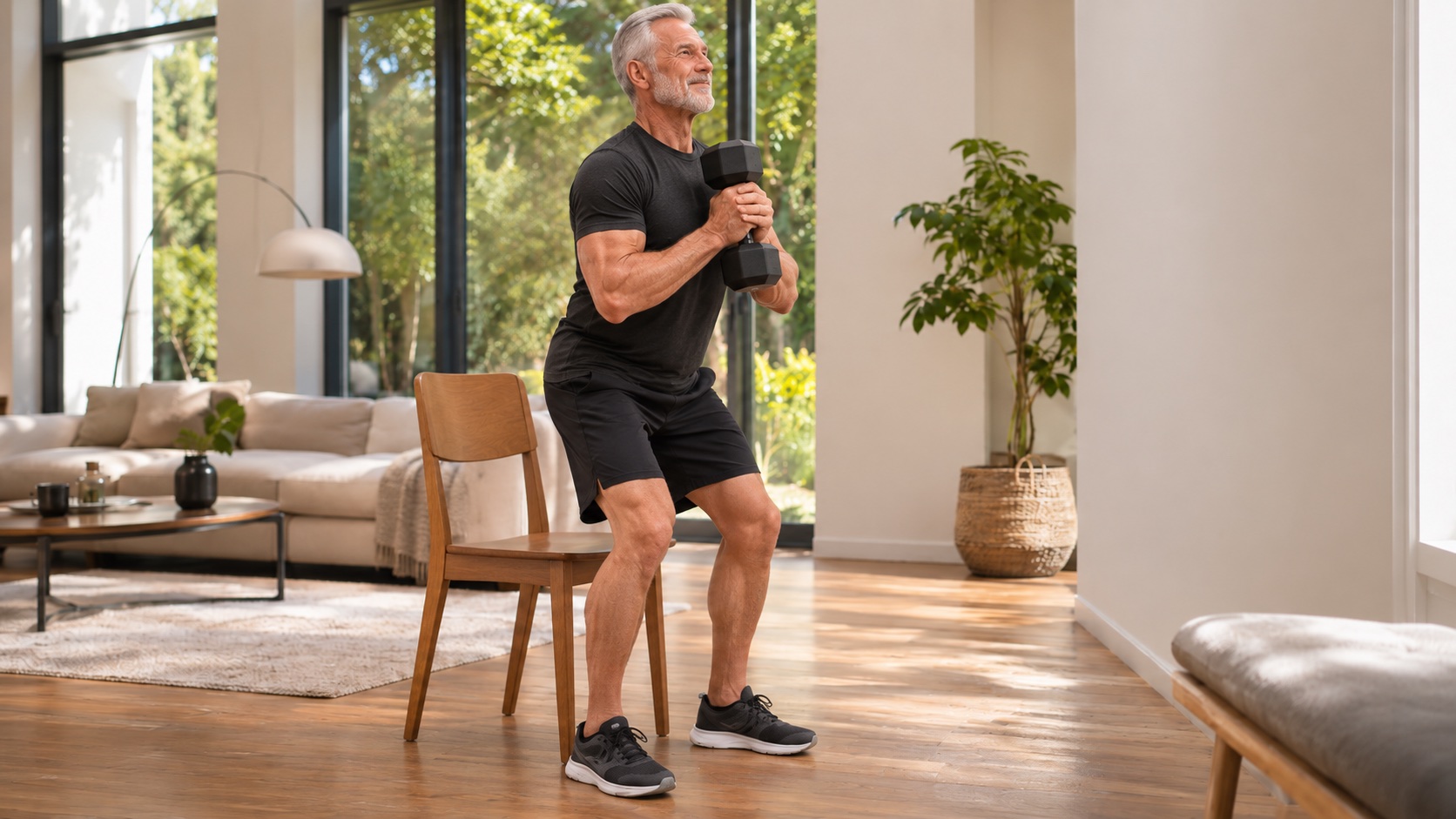
- Standing up from a chair (squat): Slowly sit down on the edge of the chair and stand up again without momentum. Later with pulling handles or additional weight.
- Rowing: On the cable machine, pull the handles towards your body, shoulder blades back and down. Strengthens the upper back and improves posture.
- Chest press: Press the handles forwards at chest height. Helps with supporting yourself and standing up.
- Hip raise: Lying on your back, raise your hips and tense your glutes. Strengthens the glutes and lower back.
- Lunge with support: Take a step forwards, lower your back knee towards the floor and steady yourself with one hand on a wall or the machine.
- Shoulder press: Press the handles upwards from shoulder height without arching your lower back.
- Calf raise: Rise onto your toes and lower slowly. Important for your gait and balance.
- Carrying and gripping: Hold two weights or handles and walk a few metres. Trains grip strength, core and posture.
How to progress over twelve weeks
| Phase | Frequency | Sets and repetitions | Effort |
|---|---|---|---|
| Weeks 1–4: learning the technique | 2 × per week | 1–2 sets of 12–15 | light to moderate, clean movement |
| Weeks 5–8: building up | 2–3 × per week | 2 sets of 10–12 | the last 2 repetitions challenging |
| Weeks 9–12: progressing | 3 × per week | 2–3 sets of 8–12 | challenging, emphasise slow lowering |
Take a break of one to two minutes between sets. Repeat the chair stand test every four weeks. Many people notice after just a few weeks that stairs and shopping are easier.
Why smart home gyms are such a good fit for muscle loss
For beginners and older people in particular, digital strength machines have tangible advantages over classic dumbbells and weight plates:
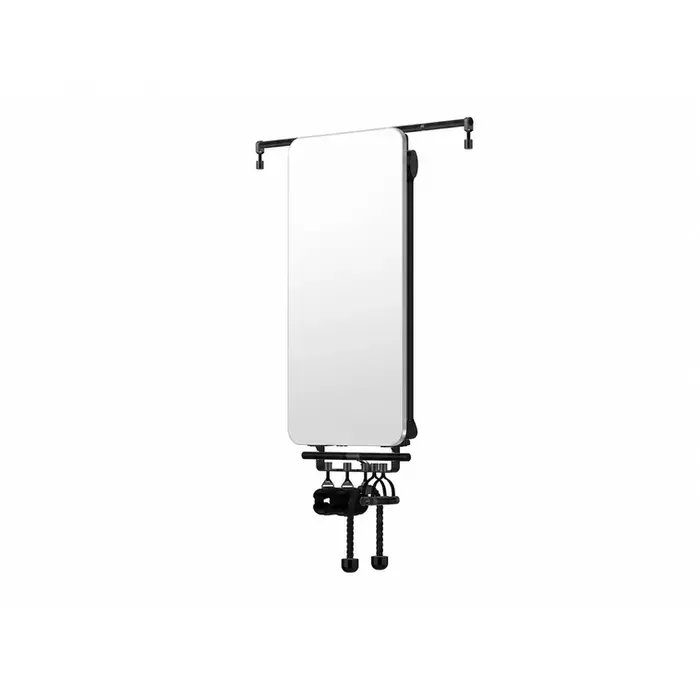
- Very easy start and fine progression: The resistance is generated by a motor and can be adjusted in small steps, on the SPlan Model Y by MIROXX, for example, from 0.5 kilograms in 100-gram increments. This lets you progress exactly as gently as your body needs.
- No handling heavy plates: You do not have to lift, carry or change weights before your training starts.
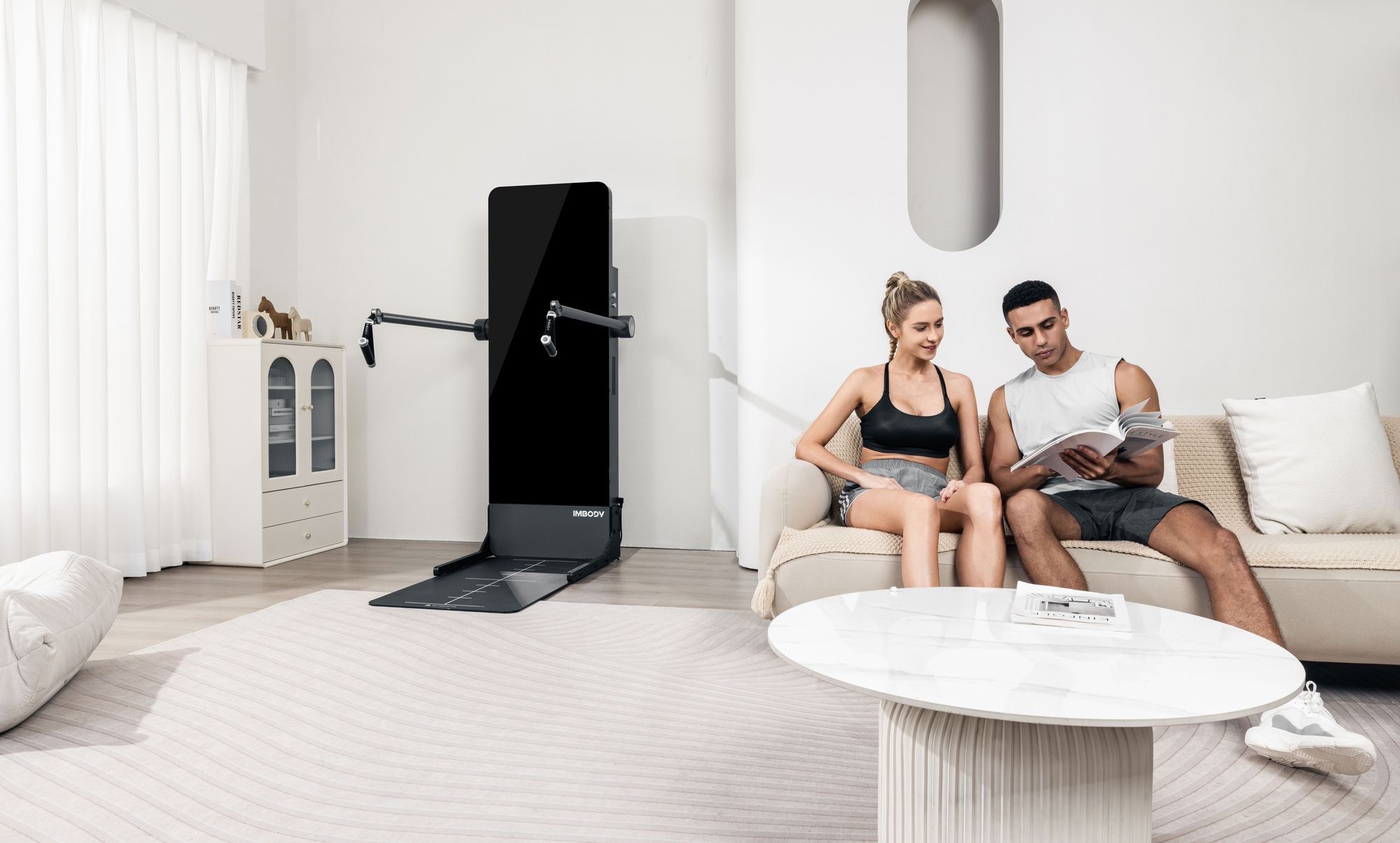
- Targeted stimulus when lowering: On the IMBODY Power S, the “Eccentric” mode increases the weight during lowering by up to 40 per cent. This lets you use the particularly effective braking phase without having to move more when lifting.
- Guided exercises and saved progress: The machine shows you the exercises, remembers weights and repetitions and makes progress visible.
- Technique feedback: With the FITVYR® Coach app, you get feedback on your form while training, so that your movements stay clean and safe.
- Training without barriers: The machine is at home, the session starts within two minutes, in any weather and at any time of day.
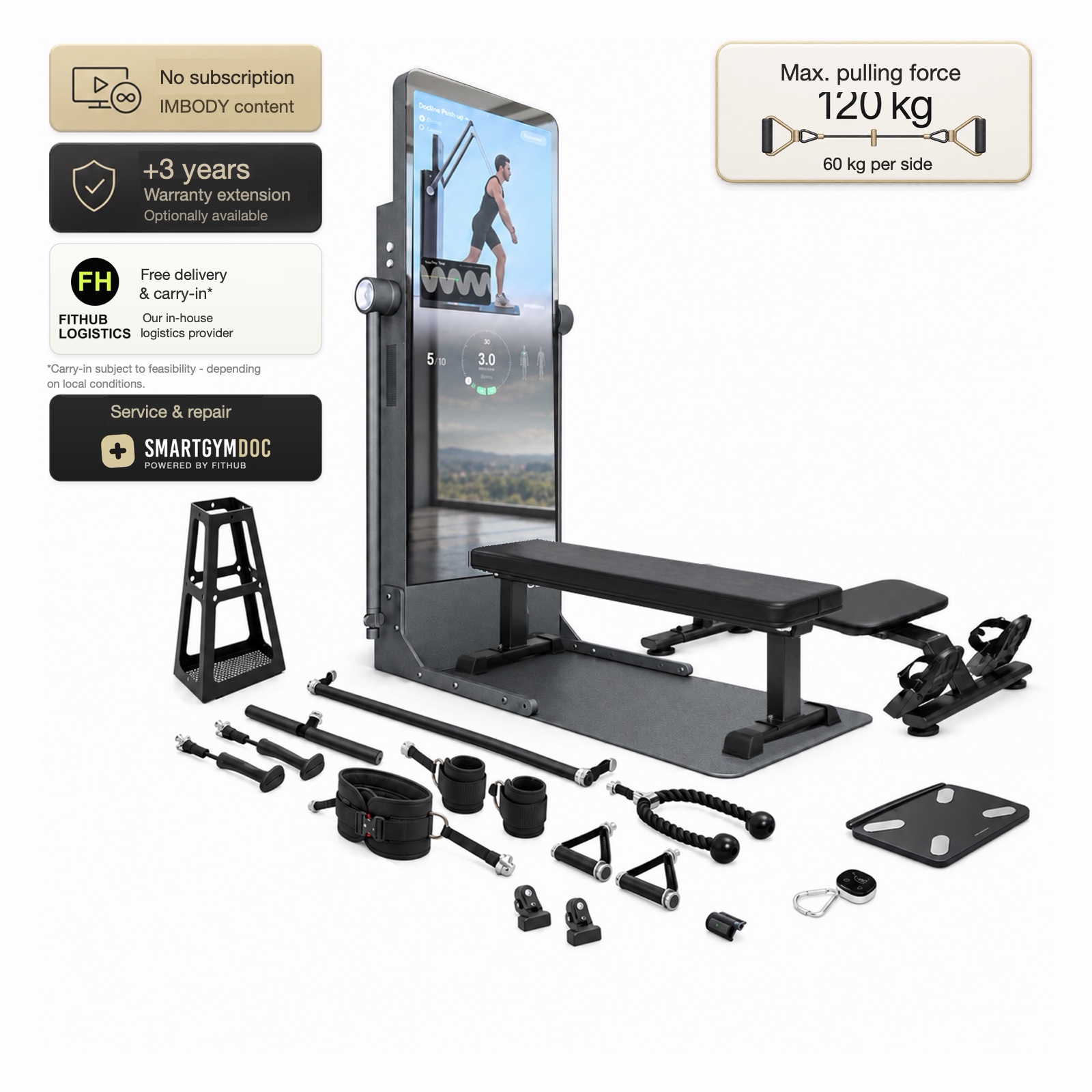 IMBODYIMBODY Power Sfrom €4,299 incl. VAT
 SPlanSPlan Model Y by MIROXX€9,499 incl. VAT
If you also want to see how your muscle mass is developing, you can record your body composition with a 3D body scanner such as the VISBODY M60. This makes results visible that the scales alone do not show, because if you build muscle and lose fat, you sometimes weigh the same as before.
Five myths about muscle loss in old age
- “You can no longer build muscle in old age.” Wrong. Studies show significant gains in strength and muscle even in people over 80 and 90.
- “Going for walks is enough.” Walking is good for your heart and circulation, but does not provide enough stimulus to maintain muscle mass. Strength training is part of it.
- “Strength training is dangerous for the joints.” When correctly dosed, it stabilises the joints. A careful start and clean technique are crucial.
- “Light weights and lots of repetitions are better in old age.” To start with, yes. But building muscle requires challenging weights over time.
- “Protein powder replaces training.” Protein supports muscle building, but without a training stimulus the body does not build muscle.
Frequently asked questions about muscle loss in old age
When does muscle loss begin?
Without targeted training, from around the age of 30, slowly at first. From 60 it often accelerates, particularly sharply after long periods of inactivity or illness.
Can sarcopenia be reversed?
Muscle mass and strength can be rebuilt at any age. How much is possible depends on your starting point, your health and how regularly you train. Strength training combined with sufficient protein is the most effective measure.
How often should I train?
Two to three strength sessions per week of around 30 to 45 minutes each are a good guideline. Add everyday movement and balance exercises.
How quickly will I see results?
Many people feel stronger after just four to eight weeks, because the way the nerves activate the muscles improves first. Visible muscle growth usually takes a few months of regular training.
Which machine is suitable for home use?
A smart home gym with digital resistance covers all the important strength exercises and can be adjusted in very fine increments. A treadmill with incline complements it for the legs and the cardiovascular system, and a Pilates reformer for posture and balance. We will be happy to work out which machine suits you in a free live consultation.
Am I too old for a smart home gym at over 70?
No. The gentle start with very low weights, the guided exercises and training in your own home make smart home gyms particularly suitable for older people. It is important to check with your doctor what you should look out for.
Conclusion: strong muscles are the best provision for old age
Muscle loss in old age is widespread, but it is not an inevitable fate. Regular strength training, enough protein, plenty of everyday movement and an eye on balance and recovery together form the most effective programme we know. The sooner you start, the better, but it is never too late.
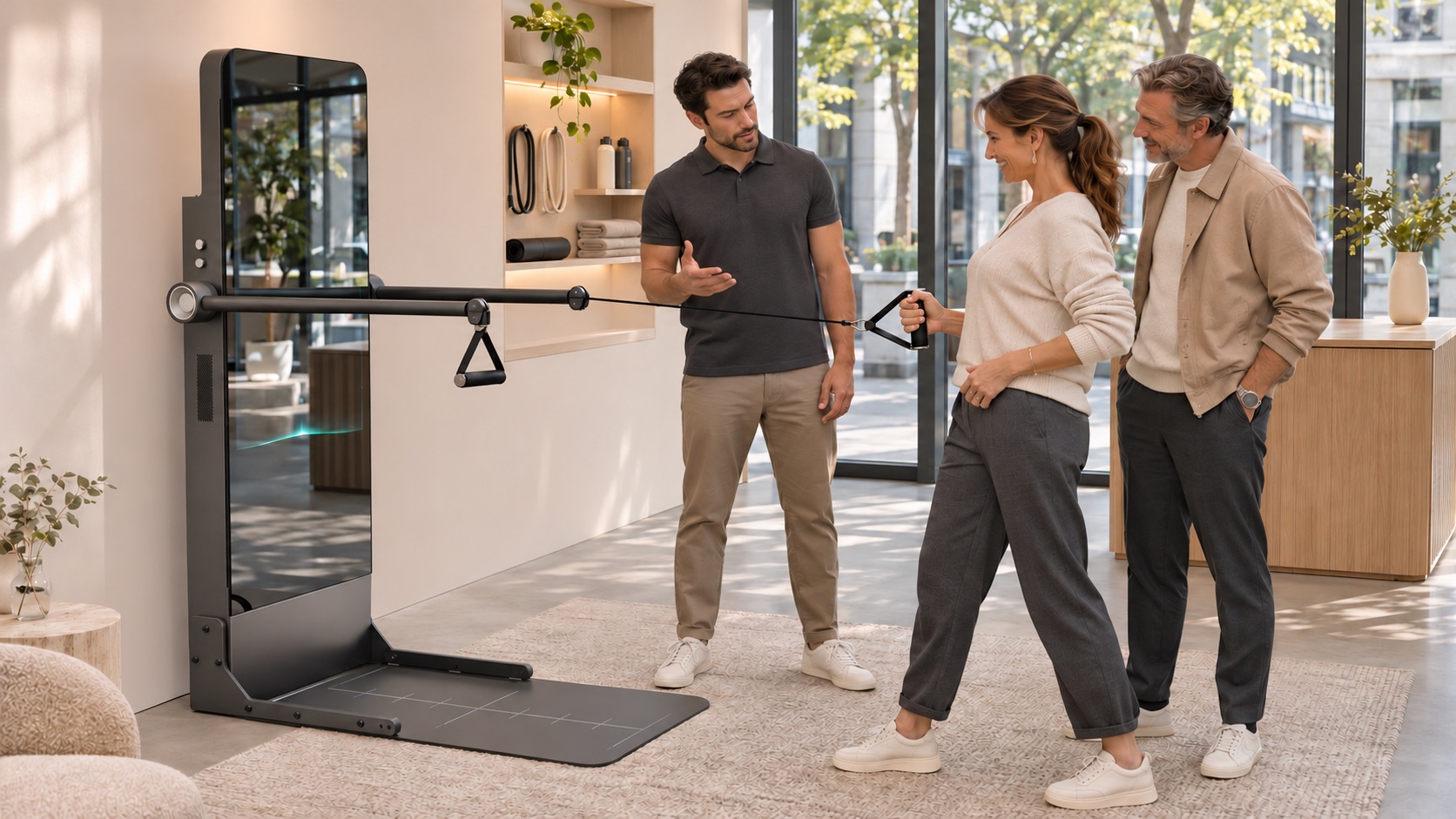
If you would like to know how you can train safely and effectively against muscle loss at home, we will be happy to advise you personally: in a live consultation by video or in one of our showrooms, where you can try out the IMBODY Power S, for example, for yourself. You will find all smart home gyms in our shop.
Note: This article is for general information only and does not replace medical advice, diagnosis or treatment. Please talk to your doctor before you start training if you have pre-existing conditions, take medication or have not trained for a long time.
Sources: Cruz-Jentoft A. J. et al., Sarcopenia: revised European consensus on definition and diagnosis (EWGSOP2), Age and Ageing (2019); Volpi E. et al., Muscle tissue changes with aging, Current Opinion in Clinical Nutrition and Metabolic Care (2004); Kortebein P. et al., Effect of 10 days of bed rest on skeletal muscle in healthy older adults, JAMA (2007); Fiatarone M. A. et al., High-intensity strength training in nonagenarians, JAMA (1990); Leong D. P. et al., Prognostic value of grip strength (PURE study), The Lancet (2015); Bauer J. et al., Evidence-based recommendations for optimal dietary protein intake in older people (PROT-AGE), JAMDA (2013); Deutsche Gesellschaft für Ernährung, Referenzwerte für die Proteinzufuhr; Malmstrom T. K., Morley J. E., SARC-F, JAMDA (2013); WHO Guidelines on Physical Activity and Sedentary Behaviour (2020).