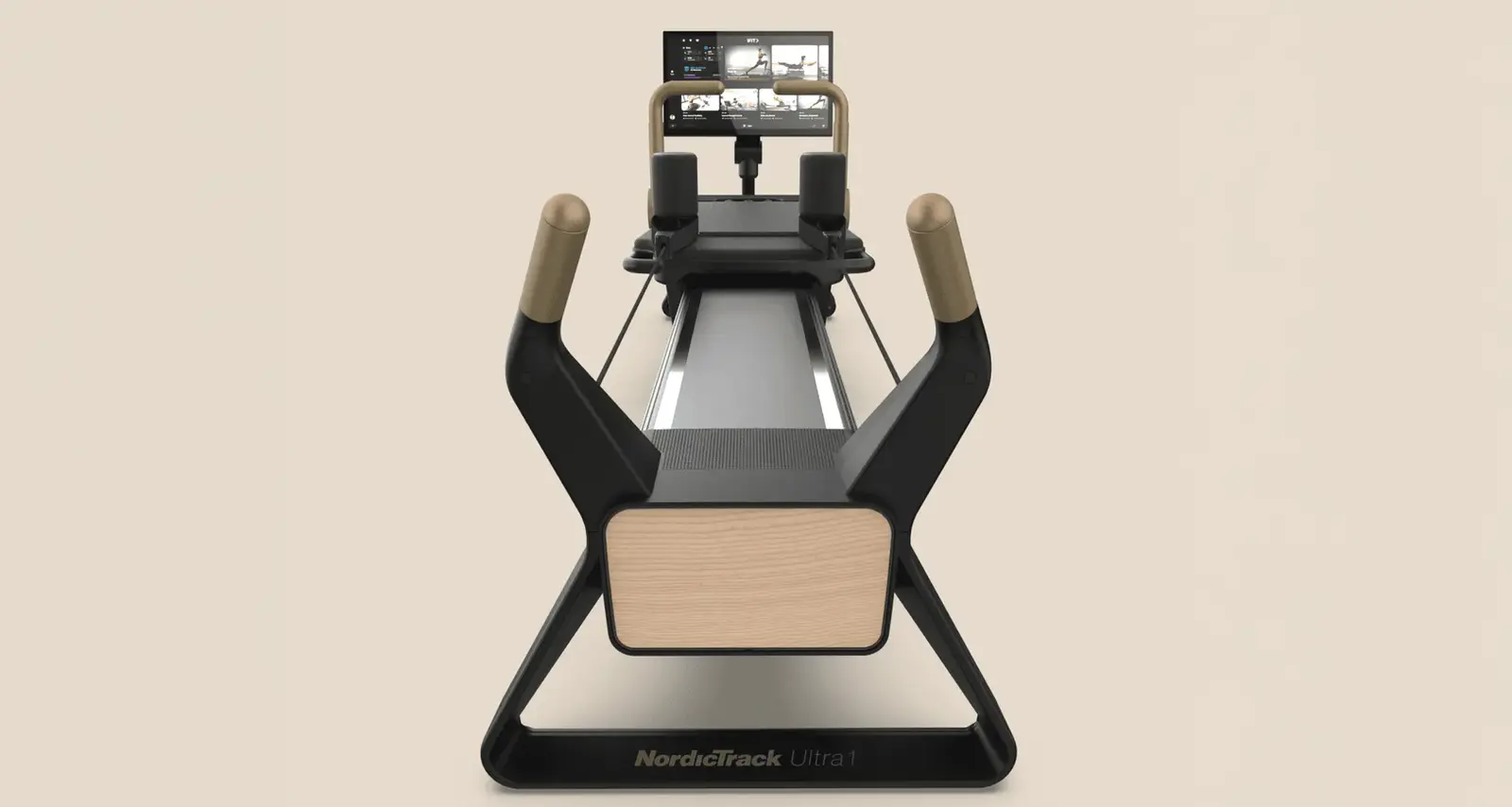
Buying a smart home gym: frame model or arm model? Which is the best smart home gym system?
The honest guide. At first glance, smart gyms all look the same – a display, cables, a few handles. What matters is the design behind them. And that is exactly what most comparisons skip.
Are you wondering how to find the best smart home gym? Or more specifically: how do I find the best smart gym for my home – and which is the best smart gym for 2026/2027? Then this guide is for you. We take an objective look at the technology, show the differences in construction and explain what really matters when buying.
A quick note first, so you know where you stand: there are two basic designs – frame models and arm models. Both work. On several important points, however, arm models have advantages due to their design. We show you why – and where an arm model also makes a compromise.
The two designs at a glance
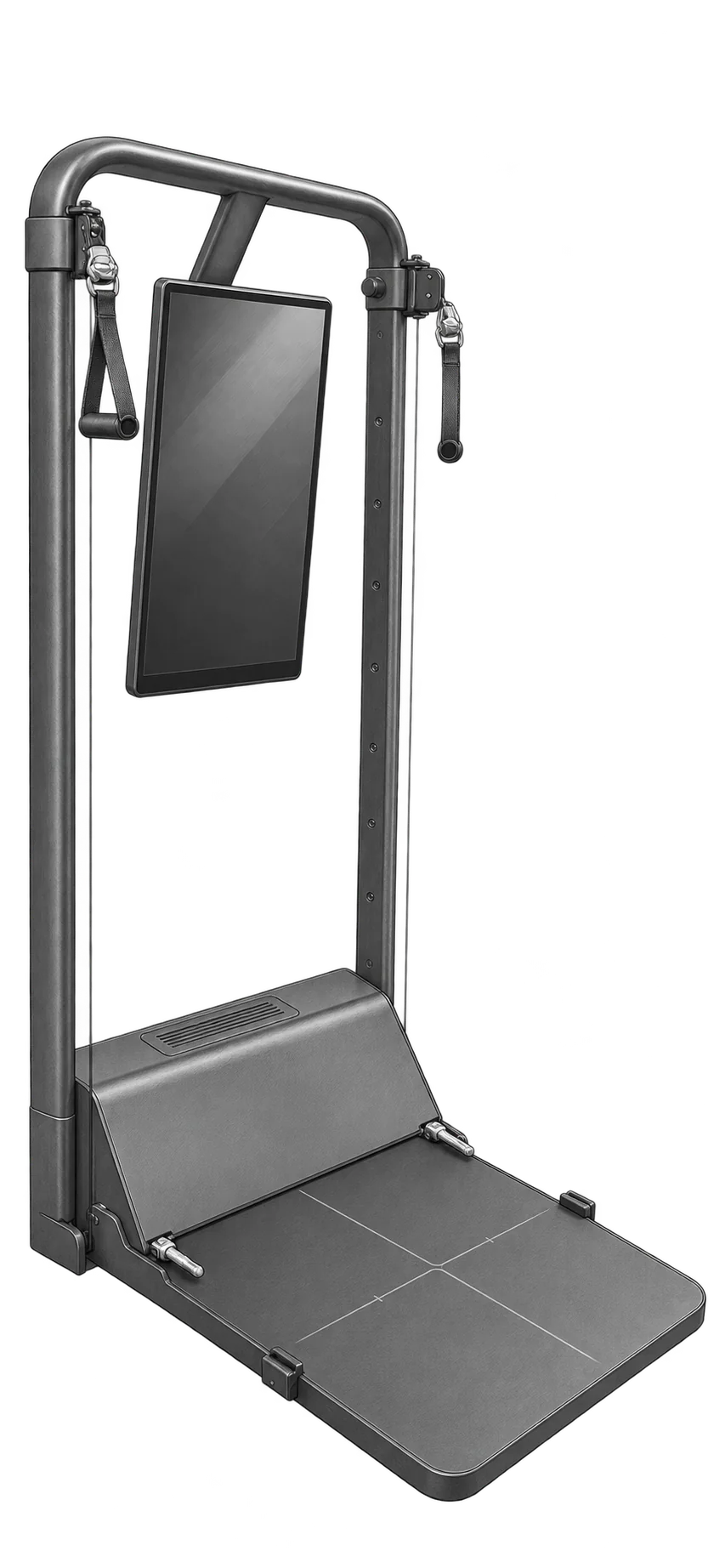
Frame models
A fixed frame or tower along which the cables are guided. Typical examples: Speediance, Aeke, Sportstech sGym, Echelon.
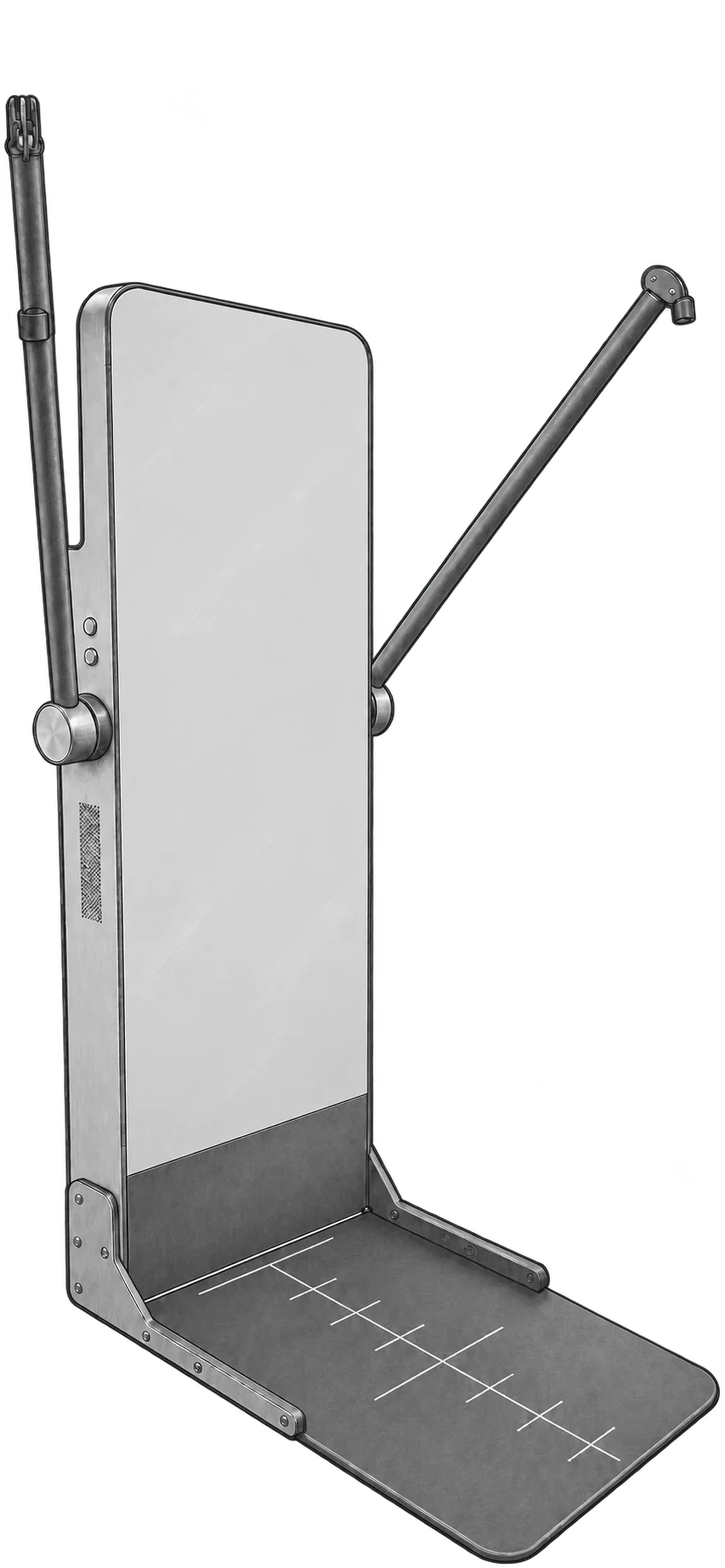
Arm models
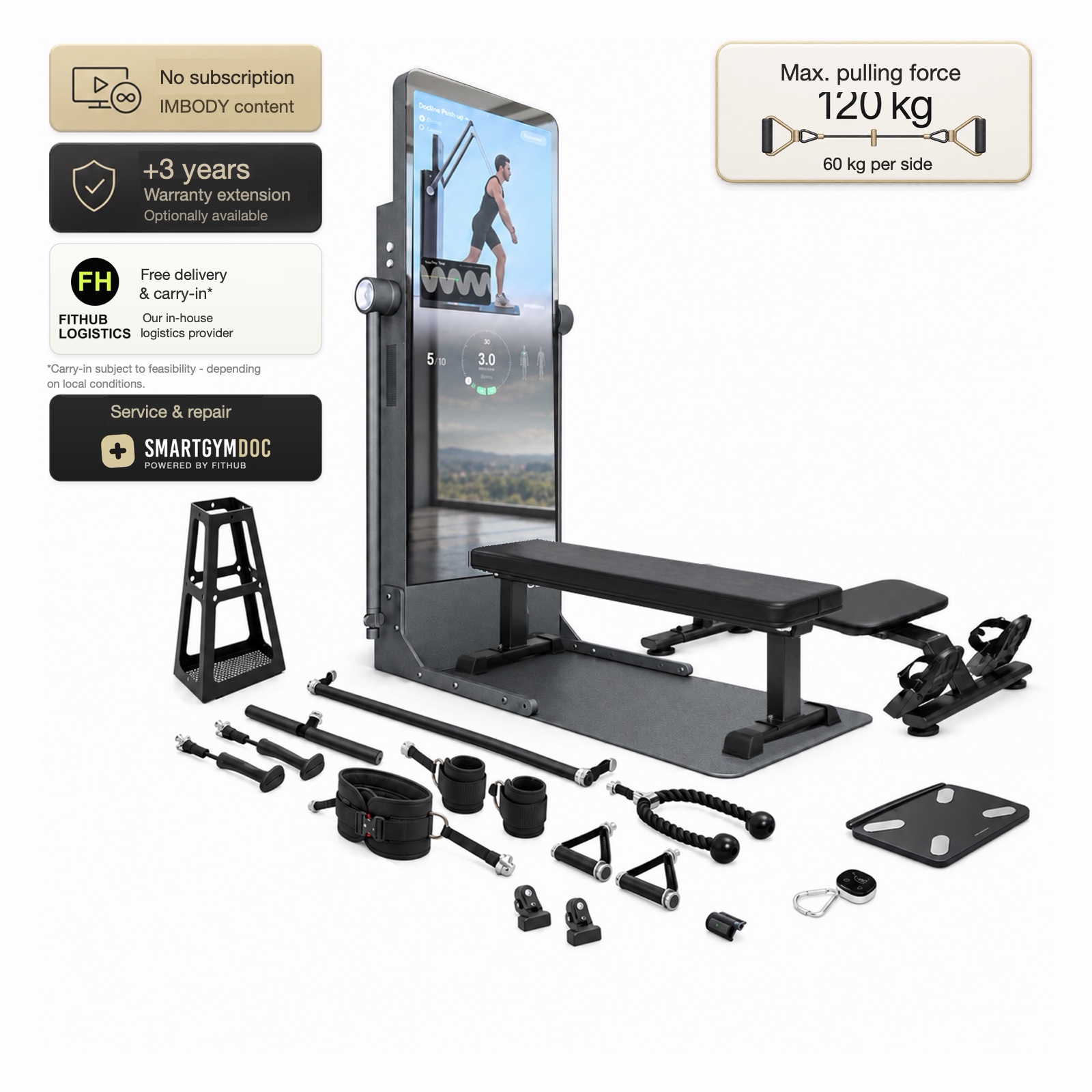
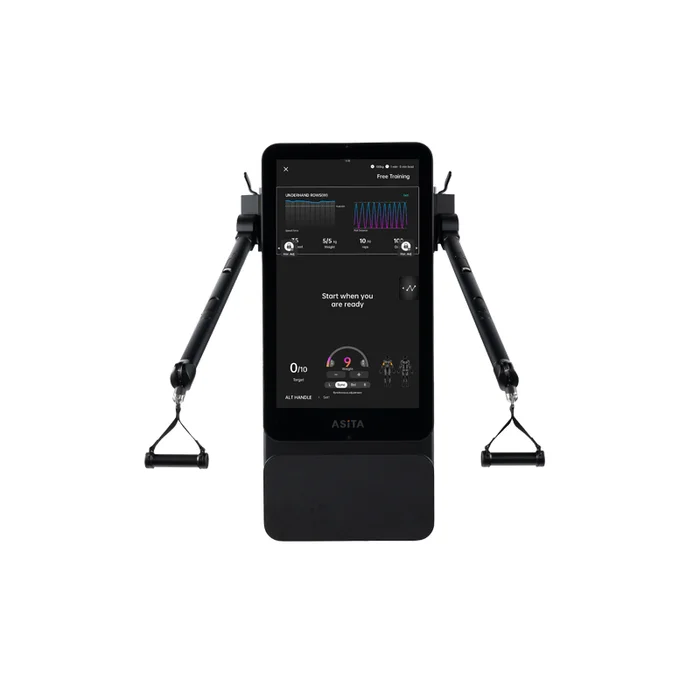
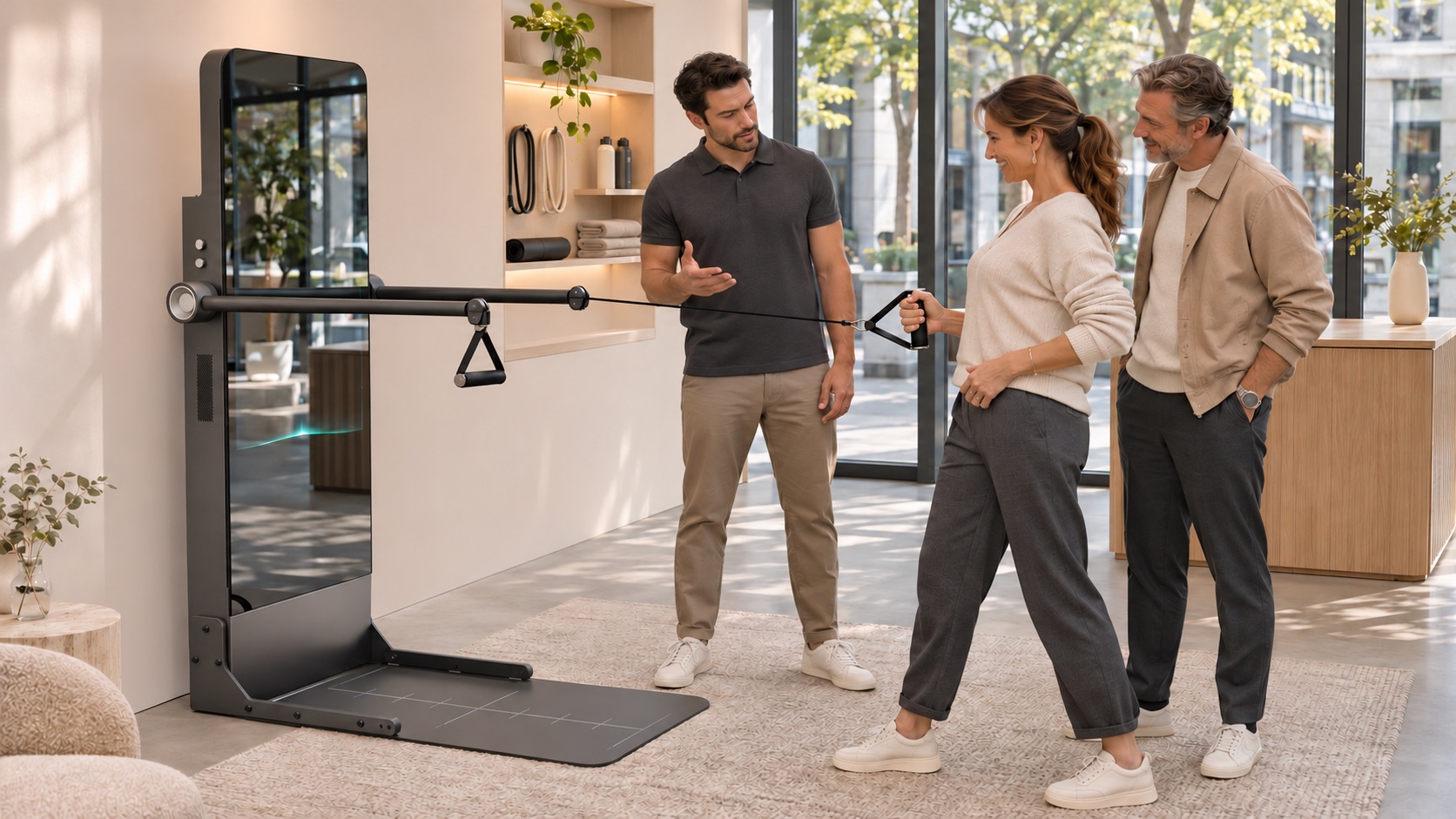
Pull via two movable arms that can be adjusted in height and angle. These include IMBODY, SPlan, Asita, Innodigym.
1Rope routing & durability
One point you cannot see in the shop, but which counts over the years: the rope routing. On many frame models, the rope runs relatively freely over deflection points. On arm models, by contrast, the rope is guided inside the arm – it runs in a channel instead of freely over an open edge. The practical effect: less abrasion on the rope and therefore, as a rule, a longer service life for this wear part. Especially if the machine is used every day, this is a noticeable long-term advantage.
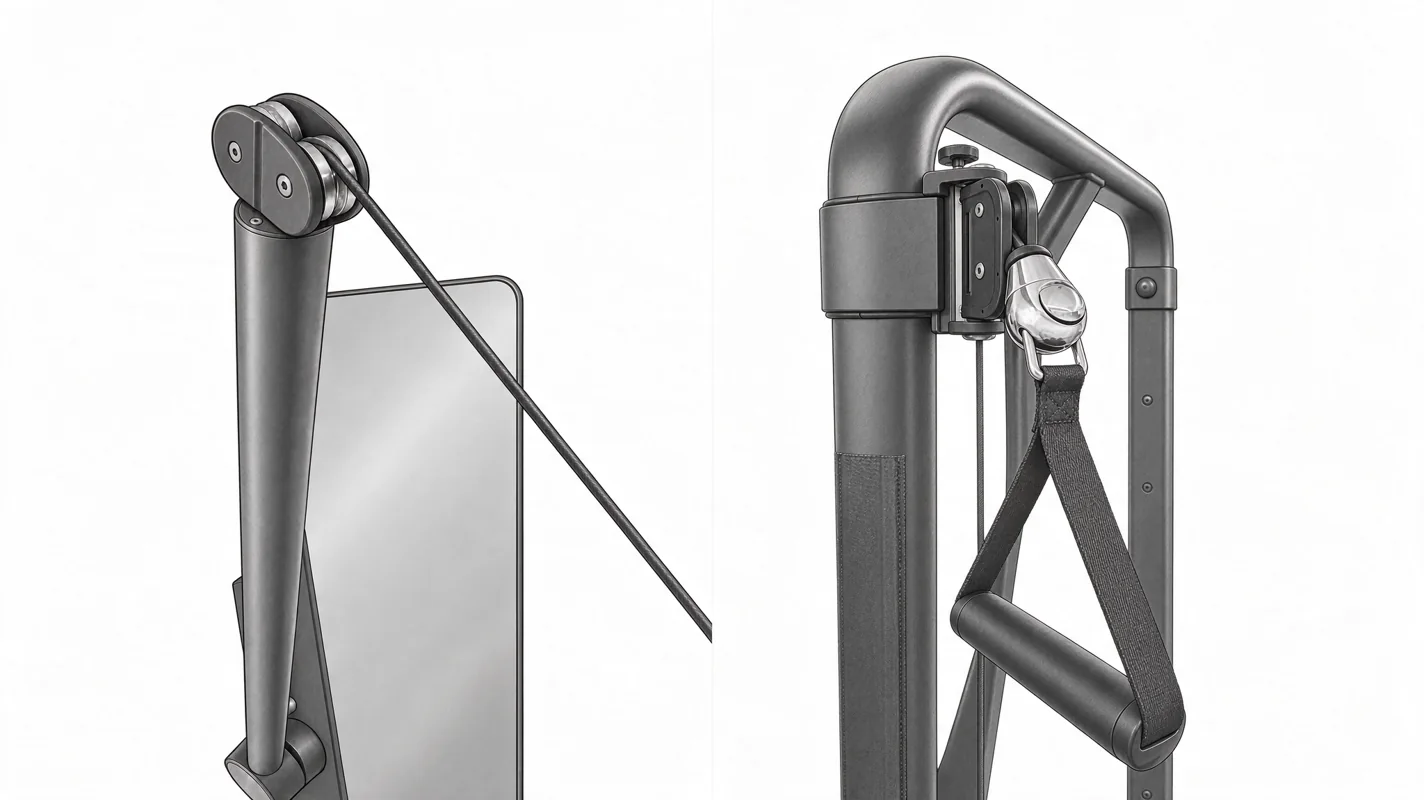
2Pull width: why the width of the machine limits the range of motion
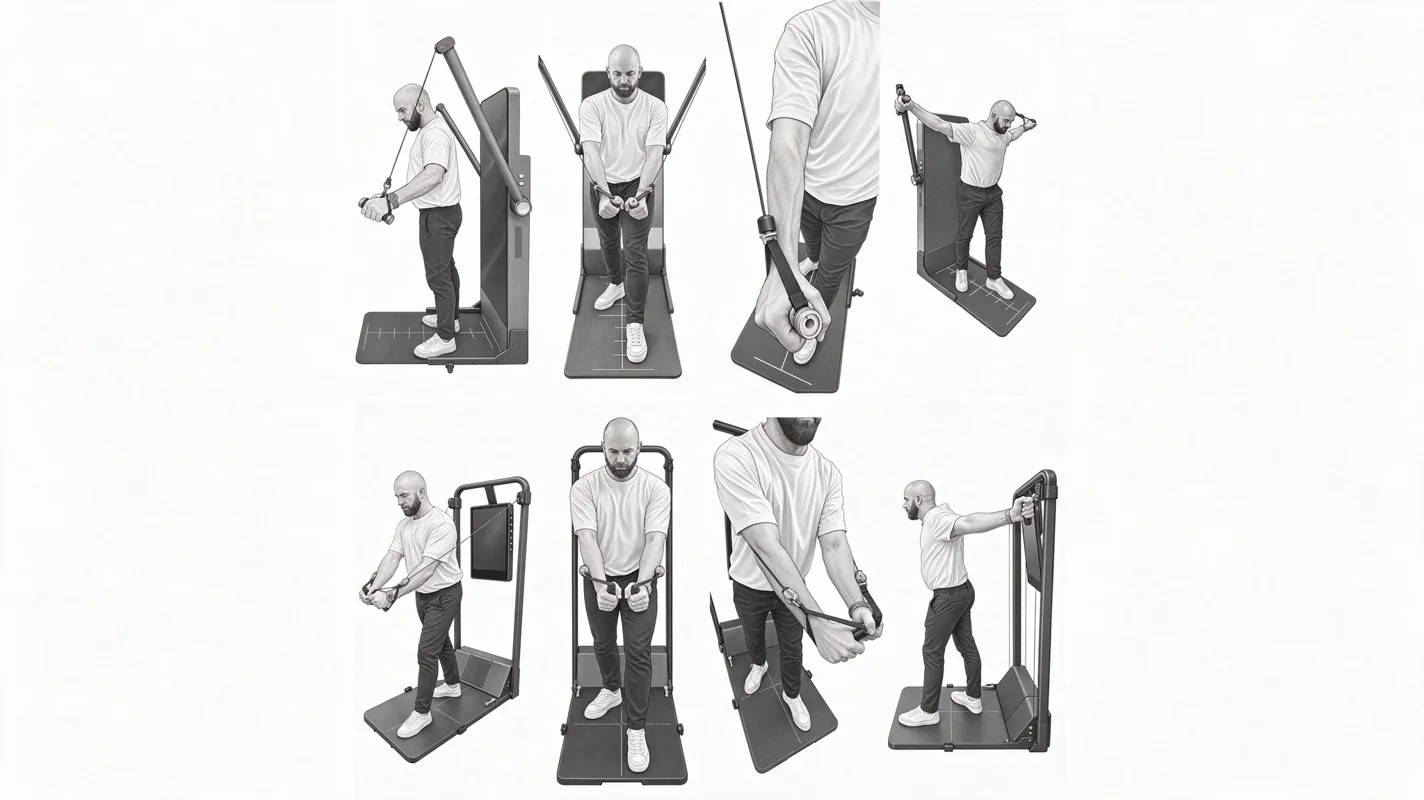
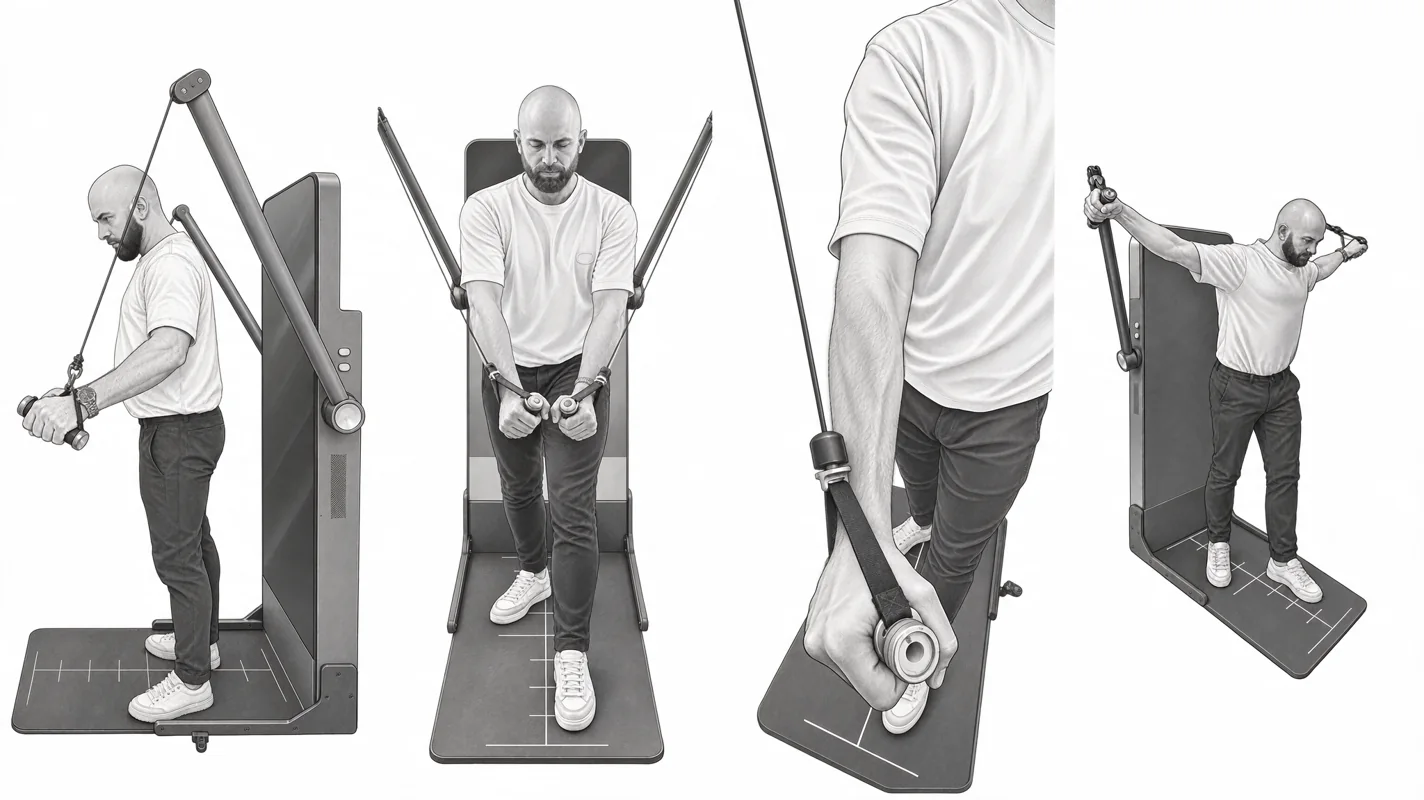
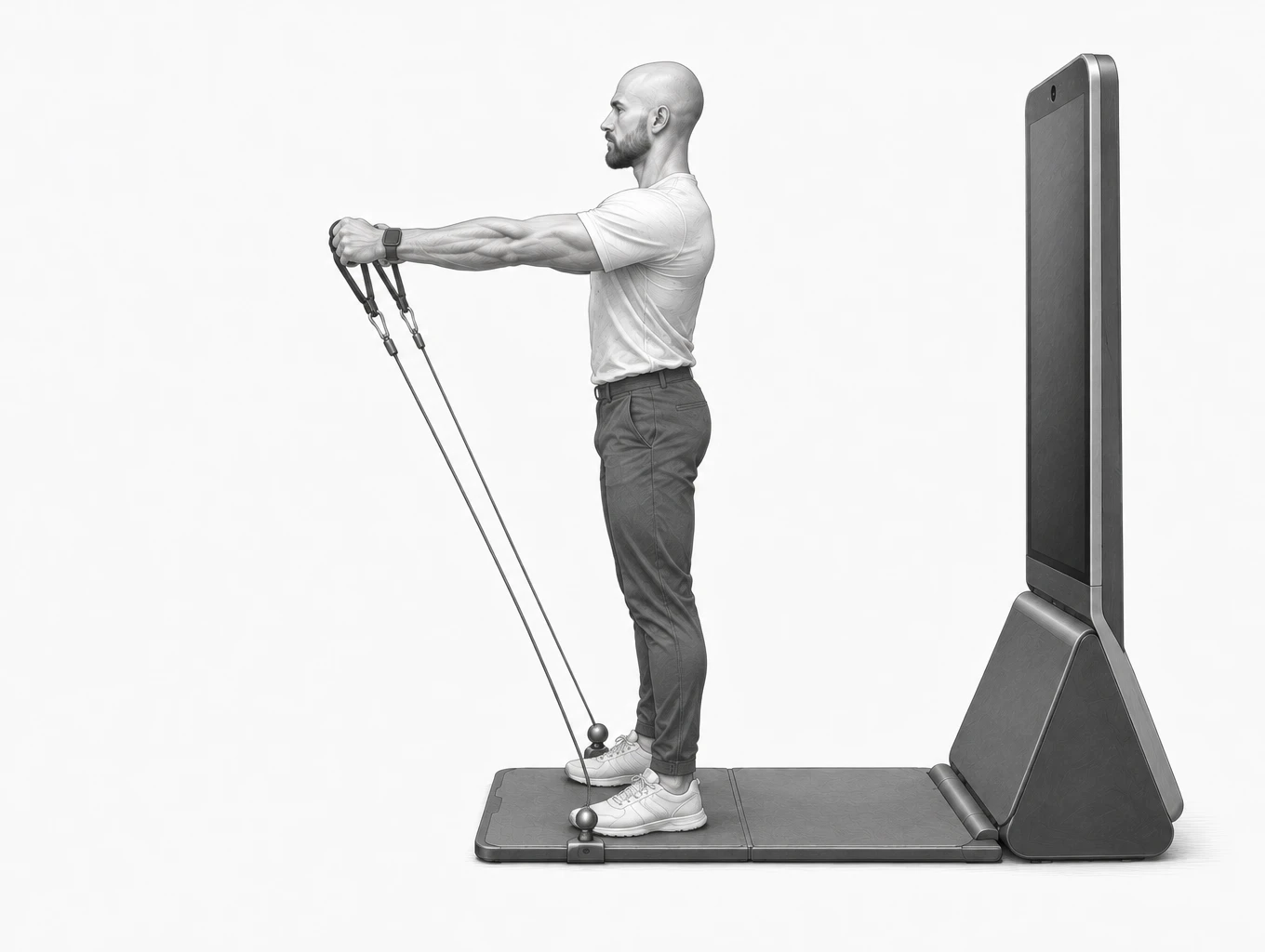
On frame models, the pull is often limited to the width of the machine by design – the ropes come out of fixed points on the frame. You notice this especially with standing cable flies (chest): when you bring your hands together at the front-most point, the ropes can cut into your arms because they come from too narrow a position.
Arm models, on the other hand, can be set to a wider position. This brings two advantages at once: a better muscle stimulus over the full range of motion – and no ropes cutting in. If you value clean, comfortable execution, an arm model gives you more scope here.
3Set-up & mounting: free-standing or on the wall
Smart gyms are set up either free-standing (with a fixed or folding floor plate) or wall-mounted. Both have their merits – but there are a few things you should know.
Wall mounting: space-saving, with one compromise
Wall mounting has a clear visual and spatial advantage: the machine takes up significantly less space. The compromise can be that one pull point fewer is available as a result (for example with IMBODY). There is a practical solution for this: a floor plate with Clips, which lets you add the missing pull point.
Free-standing: pay attention to the floor plate
If you set it up free-standing, make sure the floor plate is permanently installed – not one that folds up. There are two solid reasons for this:
- Stability: systems with a folding plate often offer less stability due to their design.
- Safety: if the plate is not properly locked, in the worst case the entire tower can tip forwards.
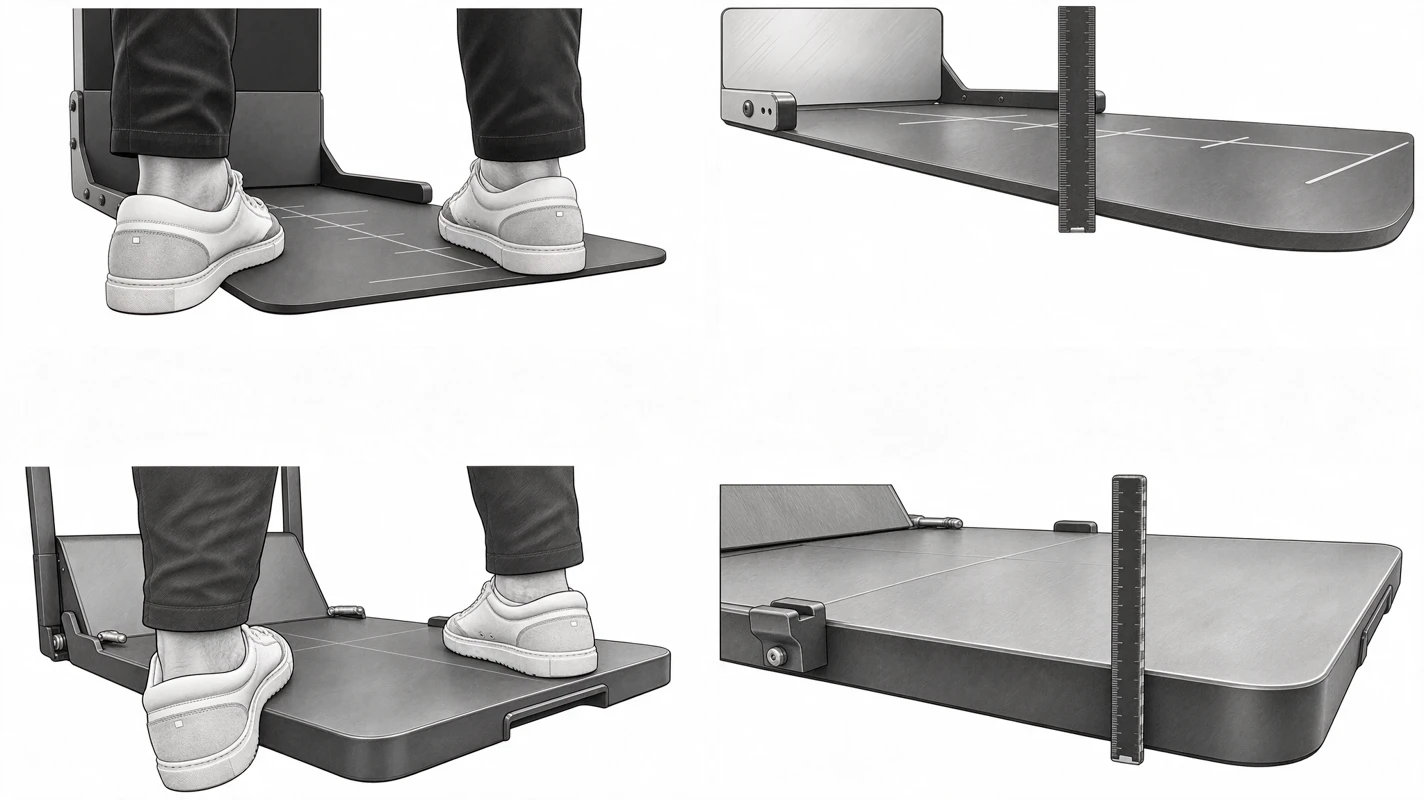
A second, often underestimated point is the height and width of the plate. With many manufacturers, the floor plate is several centimetres high and limited to the width of the machine. What looks like a minor detail on the data sheet determines comfort and safety in everyday use.
The height problem of the floor plate
- The bench does not stand level. Because of the noticeable difference in height between the plate and the floor, the training bench often cannot be placed level. The result: a slanted seating position – and some exercises cannot be performed cleanly at all.
- Risk of injury from missteps. A narrow edge several centimetres high makes it easy to step off it. If you step onto the edge at an angle, you can quickly twist or sprain something.
A positive example: the flat IMBODY floor plate
The IMBODY floor plate shows how it can be done better: it is only 0.6 cm high. In practice, this means virtually no risk of tripping or falling – the bench stands level, and the integrated Pilates exercises become considerably more comfortable because you work almost at floor level, without an obstructive edge. A small difference on paper, a big one in everyday use.
4Clean exercise execution: where the pull point is located makes the difference
This is one of the biggest practical differences. On frame models, the pull point is at frame height or on the floor plate. For some exercises that is fine – for others it is not.
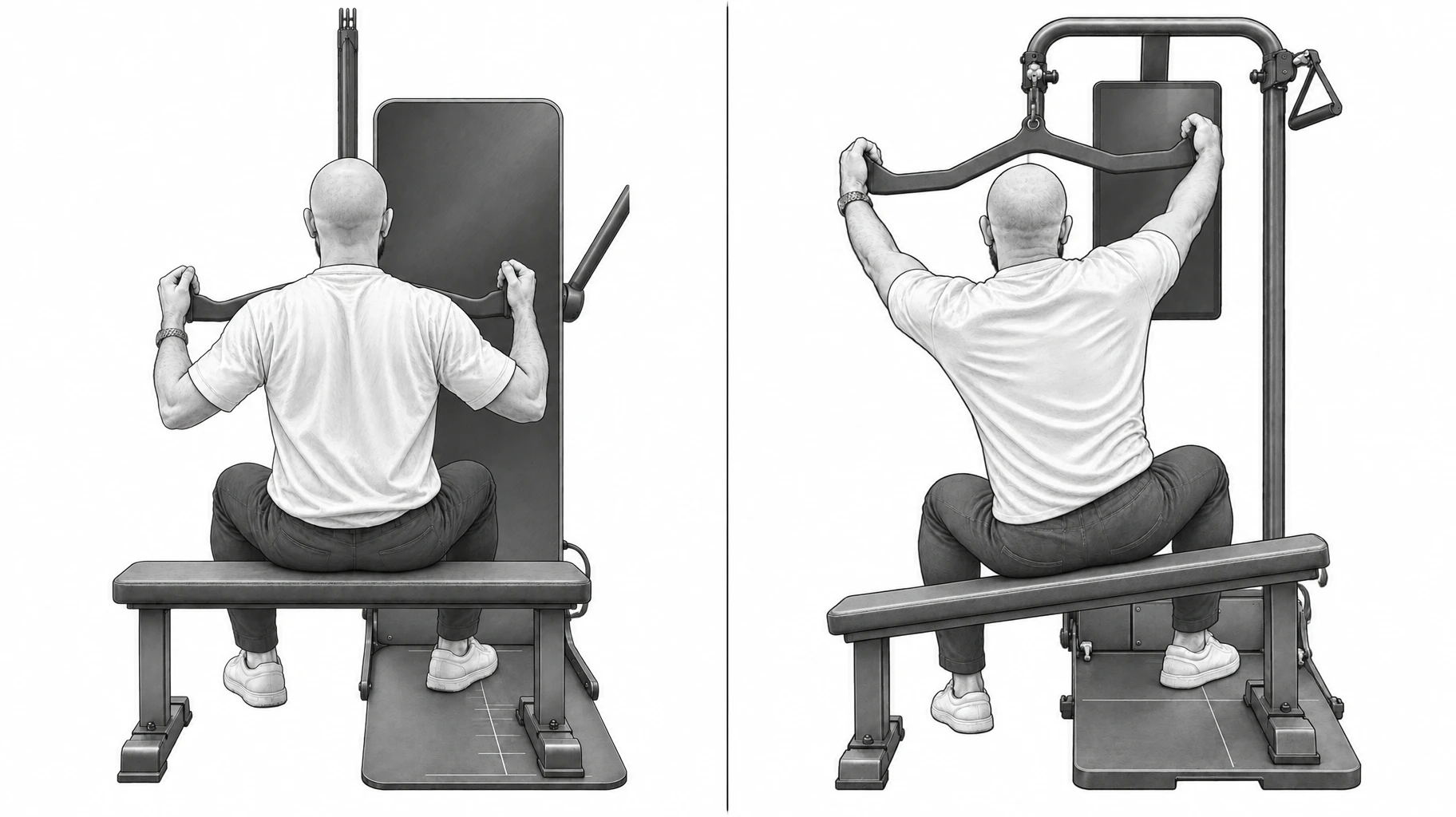
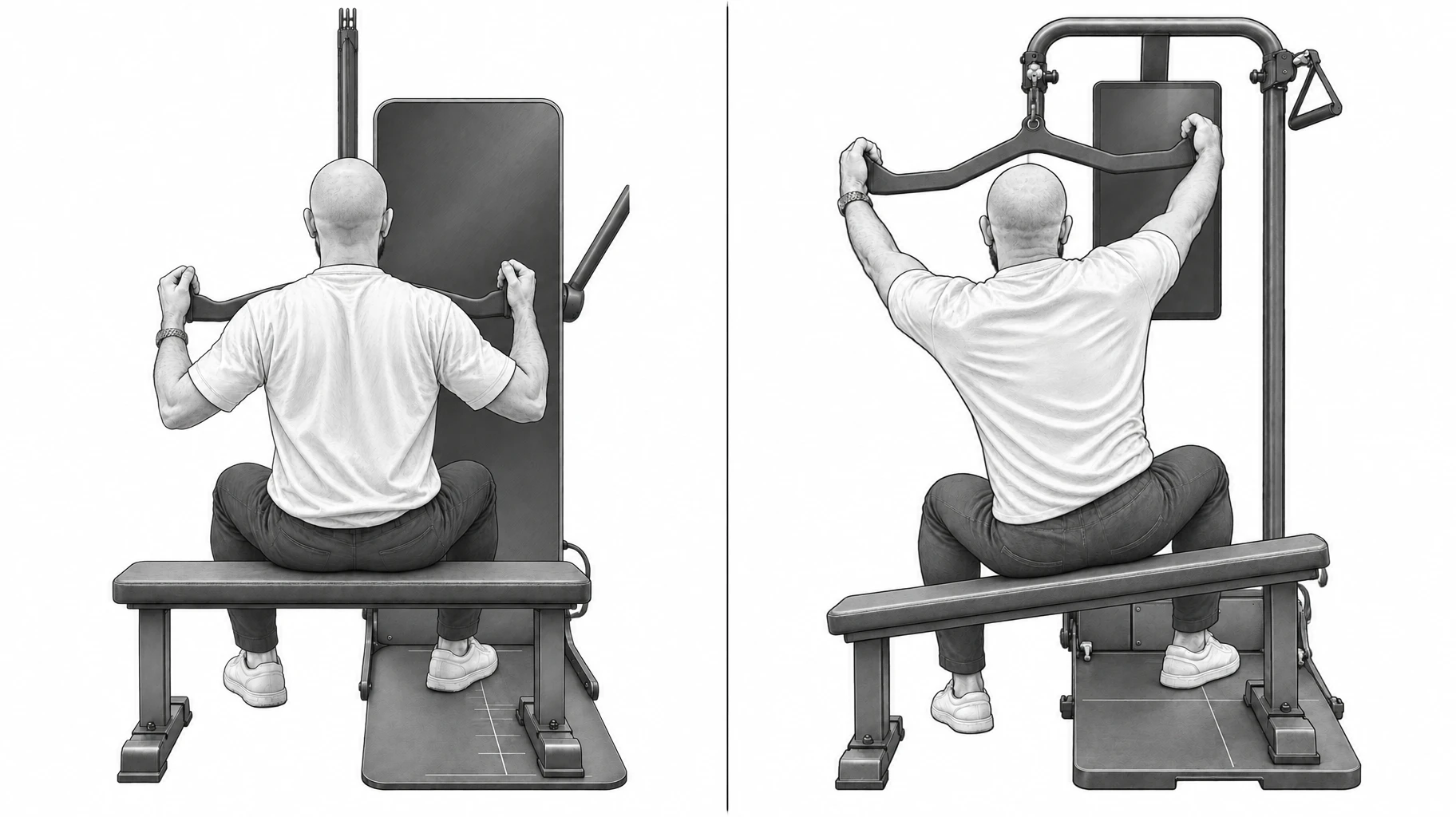
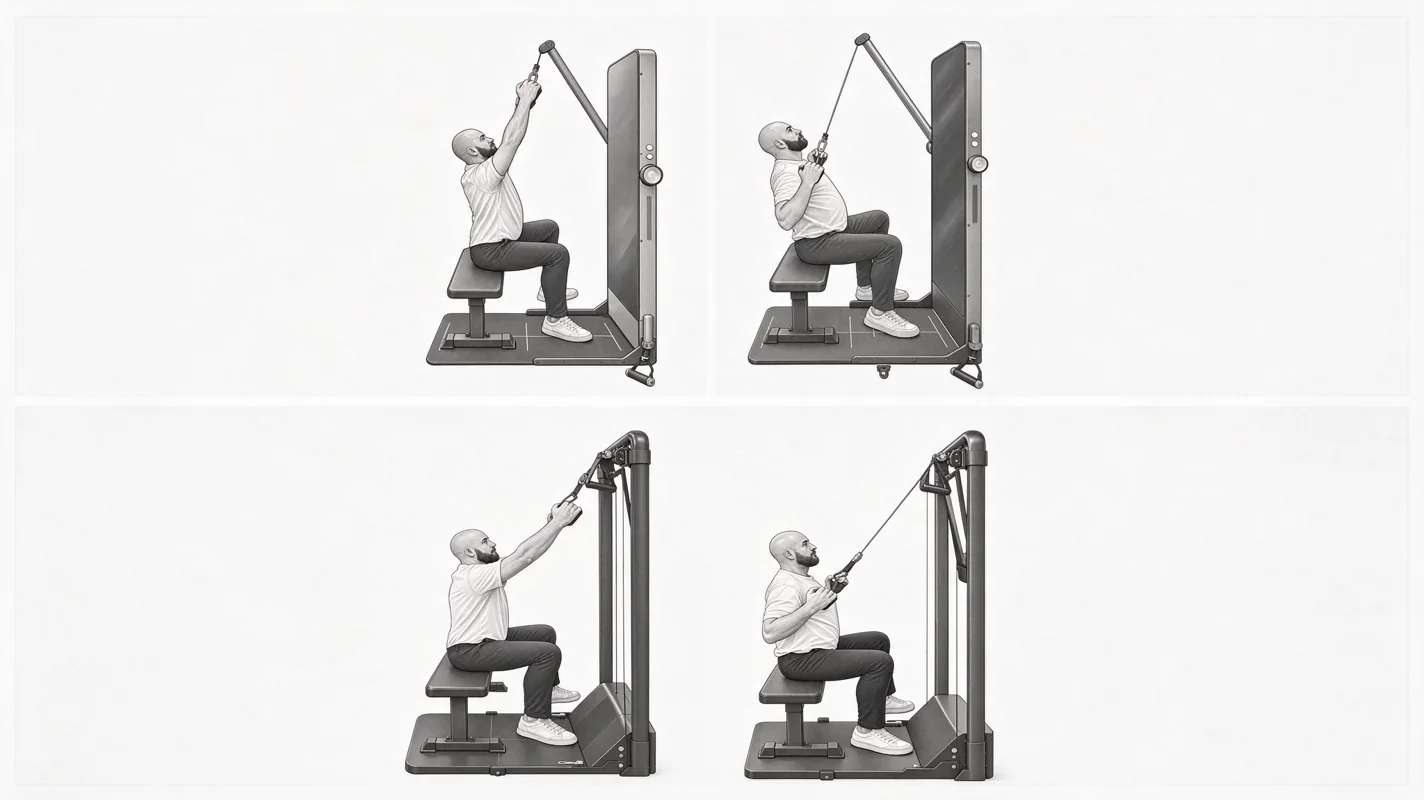
Lat pulldown: needs a pull point above the head
A clean lat pulldown needs a pull point above your head. Technically, this is only possible with an arm model – on a frame model, the pull point is too low. On top of that, the lower pull point on the frame can not only make the exercise harder but also involve a risk of injury.
Standing chest flies: direction of pull and shoulder health
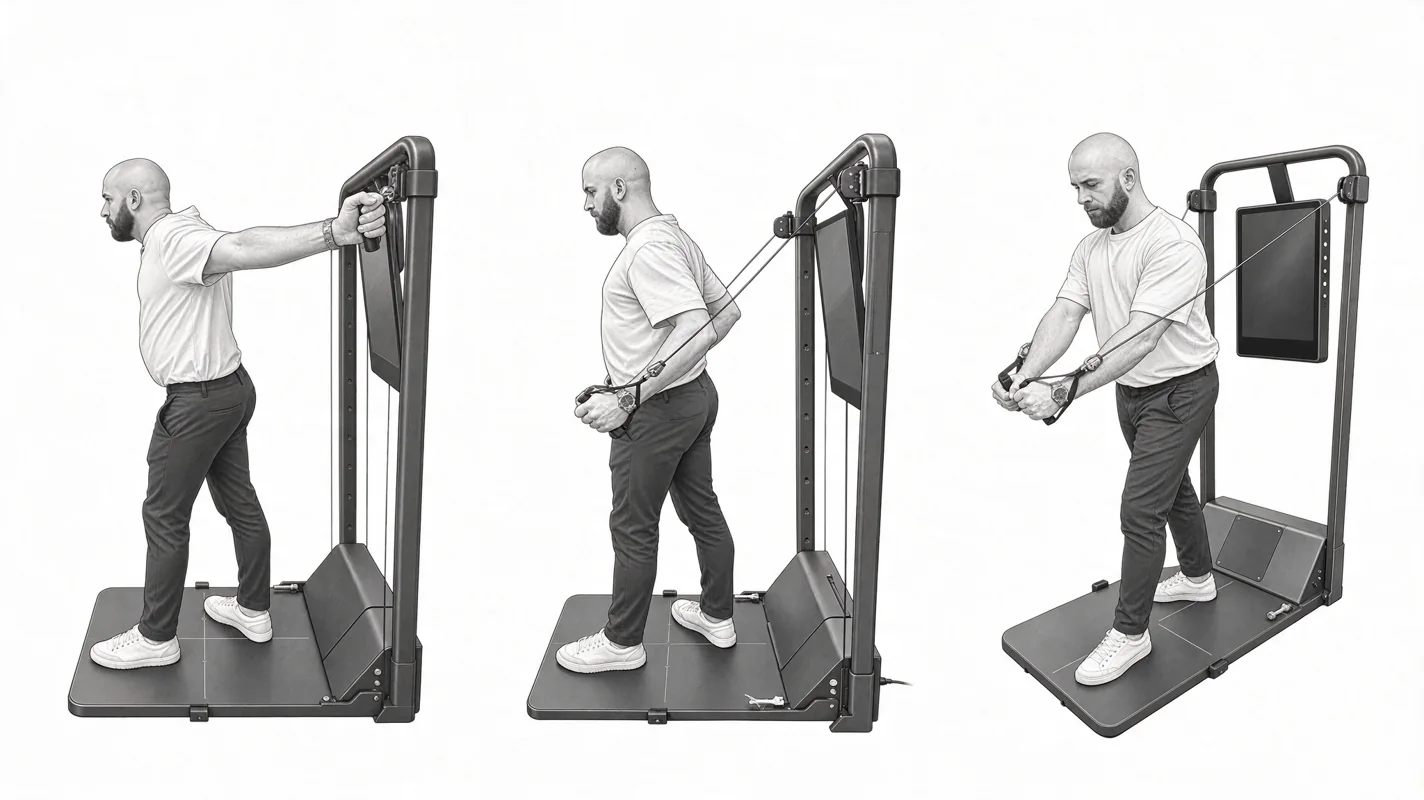
With standing chest flies, too, the design makes the difference. On the frame model, the pull point tends to be behind the body; on the arm model, it is at shoulder height. Depending on the weight, on the frame model it is already a struggle just to get into the starting position. And at the end of the exercise, when your strength fades, the weight pulls backwards – this can put a heavy strain on the shoulder. At shoulder height (arm model), the movement remains more controlled.
5Monitor: permanently installed beats “attached at one point”
There is no general rule for the monitor – it is not true that frame models always have one type of monitor and arm models always the other. This differs from model to model. What really matters: the monitor should be permanently installed and not just hang from one point.
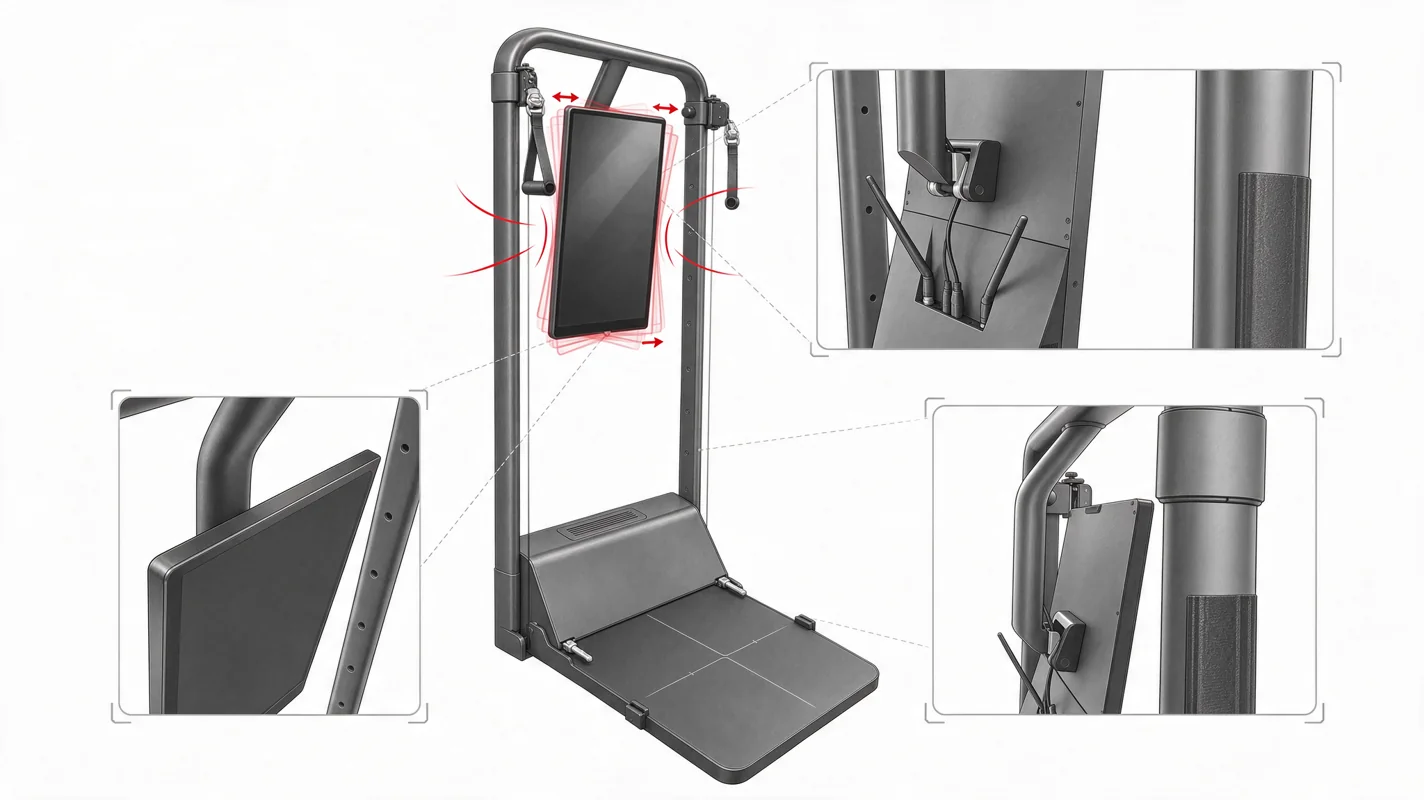
The reason is physics: depending on the weight and exercise, large forces act on the frame and arms. Frame bases in particular sometimes lack sufficient dead weight and stability – then the monitor wobbles noticeably, and reading the training data becomes unpleasant. A permanently integrated monitor stays steady.
Permanently installed monitors can be found, for example, on IMBODY, SPlan, Asita, Echelon, Sportstech and the Aeke K1. Depending on the version, models such as Speediance and Innodigym are more prone to wobbling due to the type of mounting.
6Special case: Aeke
Aeke deserves a paragraph of its own. A model with arms has been announced – but currently only the K1 is available in the shop. By design, the K1 has only one pull point (starting from the floor plate). This significantly limits the number of possible workouts. If you want the full variety of exercises, you should take this into account before buying.
7The camera trap: putting advertising promises into perspective
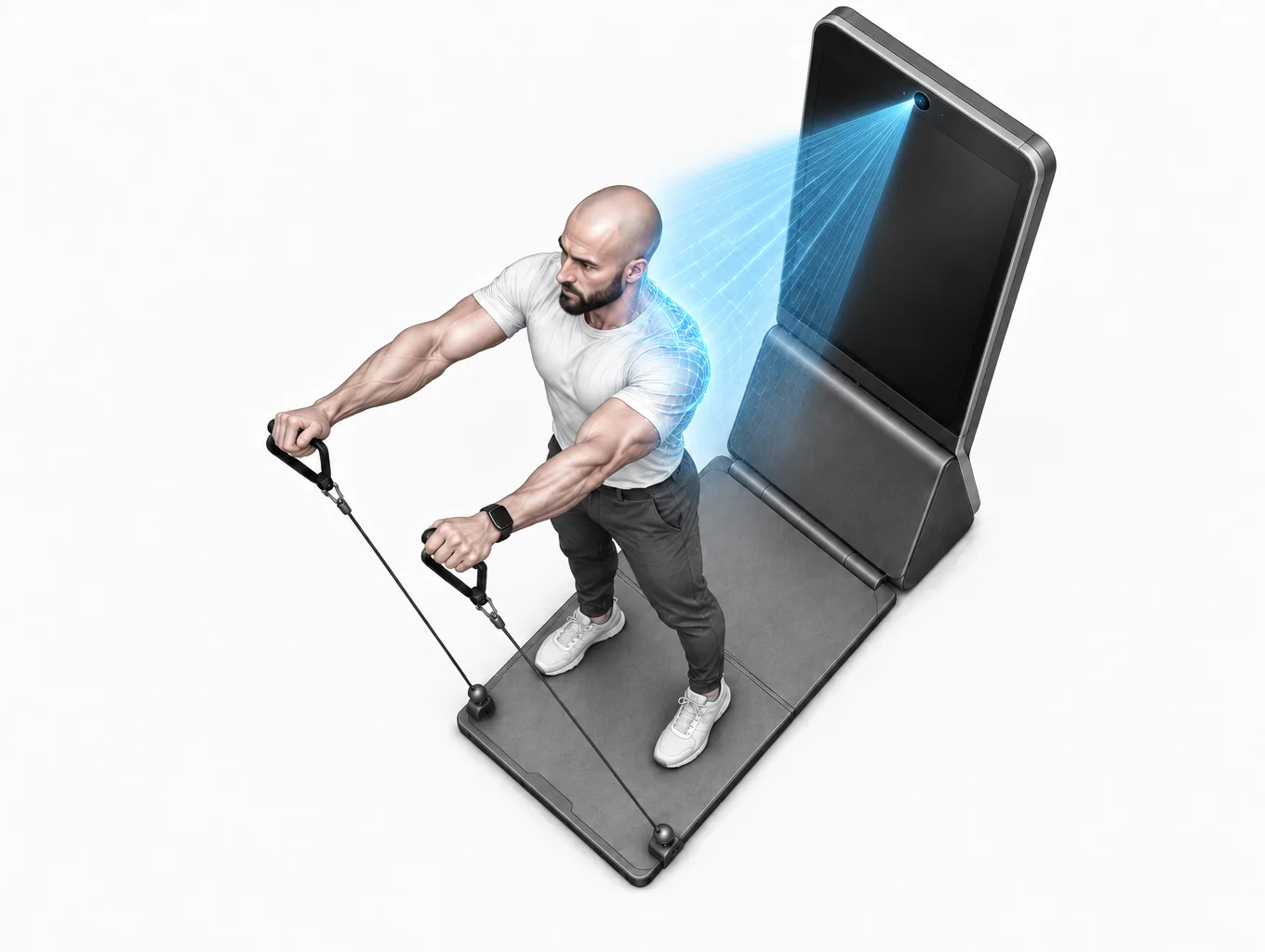
Do not be fooled by advertising promises. Some machines – such as Aeke and Innodigym – have a built-in camera and in some cases tracking sensors. Sounds good, but there is a catch: this camera cannot see you when you train with your back to the machine – and that is exactly the case with many exercises. In addition, light plays a major role with camera systems. In unfavourable lighting conditions, detection suffers.
8 · Our solution: the FITVYR® Coach App
That is why we at FITVYR® developed the FITVYR® Coach App: your training should work regardless of whether you look into a permanently installed machine camera or not – and regardless of the light. The app runs on your smartphone and supports your training independently of the machine – where you are, in your position, with your equipment.
What makes it special: the Coach App is not tied to a single brand. It provides live tracking and workout analysis for your smart gym – whether it is an arm or a frame model.
What the FITVYR® Coach App can do
Live tracking & live workout analysis
Real-time evaluation of your exercises and execution – optimised for IMBODY, SPlan, NordicTrack and Asita, also usable with Speediance, Aeke, Innodigym, Sportstech and Tonal.
Screen mirror
Mirror your training from your smartphone directly to the machine screen or your TV – keep an eye on everything without looking at the small display.
Food analysis
Log your meals and have calories and nutritional values analysed automatically – training and nutrition in one place.
Adaptive training plan
Your plan adapts automatically – for example, if you are above your calorie target, the app adjusts your training accordingly.
Cooking AI chat
Your AI assistant for suitable recipes and nutrition questions – right in the chat, tailored to your goal.
Live classes with real trainers
Coming soon: guided classes with real, licensed trainers – directly in the app.
The checklist: smart gym 2026/2027
Finally, the compact buying advice – as a basis for deciding on the best smart gym 2026/2027:
- Pull point height: do you need exercises like the lat pulldown? Then look for a pull point above your head – only arm models can do this cleanly.
- Pull width: can the arms be set wide (cable flies without the ropes cutting in)?
- Rope routing: is the rope guided (less abrasion, longer service life)?
- Floor plate: permanently installed rather than folding – and as flat as possible (avoids the risk of tripping, tipping and twisting an ankle; the bench stands level).
- Monitor: permanently installed rather than attached at just one point – stays steady under load.
- Number of pull points: is the number enough for your workouts (think Aeke K1 with only one pull point)?
- Camera promises: question built-in cameras – they cannot see you from behind and depend on light.
- Space: wall mounting saves space (possibly one pull point fewer, solvable with a floor plate + Clips).
Conclusion
Both designs can get you fit. But if you value clean exercise execution (lat pulldown, wide cable flies), durable technology, a steady monitor and a safe, flat floor plate, an arm model has the advantage on most points. And whichever machine you choose: with the FITVYR® Coach App, you get coaching that works independently of the machine camera and the lighting – wherever you train.