Smart or classic Pilates reformer: what is the difference?
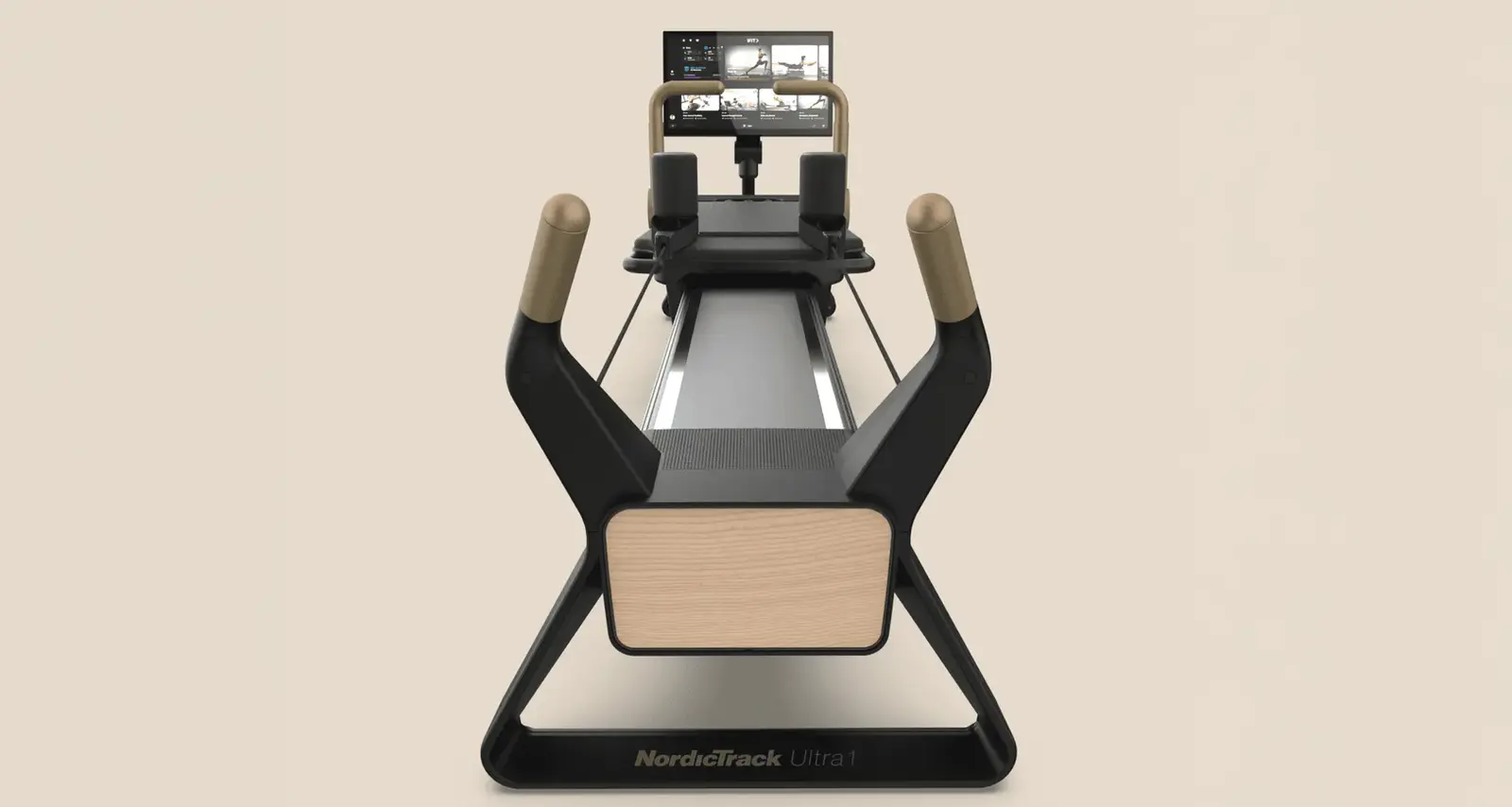
At first glance, a Pilates reformer always looks similar: a long frame, a carriage, springs and ropes. Nevertheless, there are now two very different types of equipment. Classic reformers work only with springs and your knowledge. Smart reformers set the resistance at the push of a button and bring the classes to a screen. In this guide, we explain how a reformer is constructed, what distinguishes the two types and which one suits you.
How a reformer is constructed
Every reformer consists of the same basic parts:
- Frame: the long base on which everything sits.
- Carriage: the padded surface you lie on, which rolls back and forth on rails.
- Springs: They connect the carriage to the frame and create the resistance.
- Footbar: the bar at the end that you push off from with your feet or hands.
- Ropes with loops: for exercises with your arms and legs.
- Shoulder rests and headrest: They hold you in position.
Depending on how many springs are attached and which ones, an exercise is easier or harder. This is exactly where the biggest difference between classic and smart reformers lies.
The classic reformer
On a classic reformer, you re-hook the springs by hand. You choose the resistance via the number and strength of the springs. There are no electronics. The guidance comes from a trainer, from videos or from your own knowledge.
This has advantages: a classic reformer needs no power, no Wi-Fi and no membership. For beginners, however, it is more difficult. You need to know which springs suit which exercise, and every re-hooking interrupts the flow.
The smart reformer
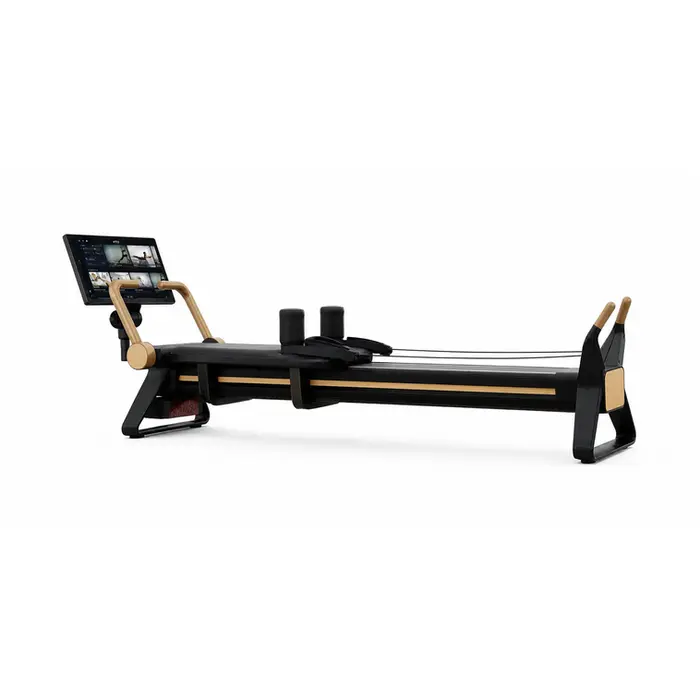
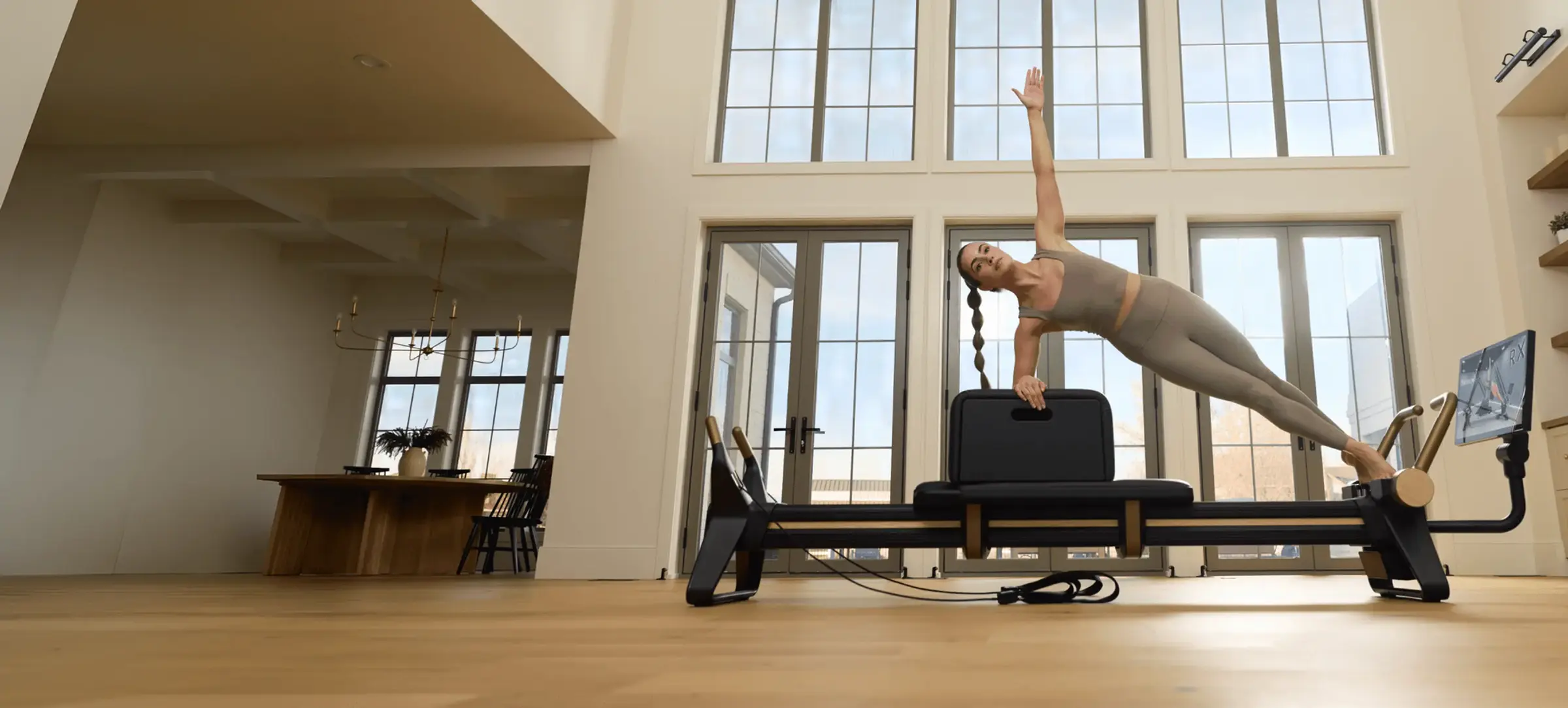
A smart reformer combines the mechanics with technology. Taking the NordicTrack Ultra 1 Reformer as an example:
- Resistance at the push of a button: Three buttons instead of re-hooking springs: green 10 kg, blue 15 kg, red 20 kg. Combined, this gives 10 to 45 kg in 5 kg increments. The springs are protected inside the spine; you no longer touch them.
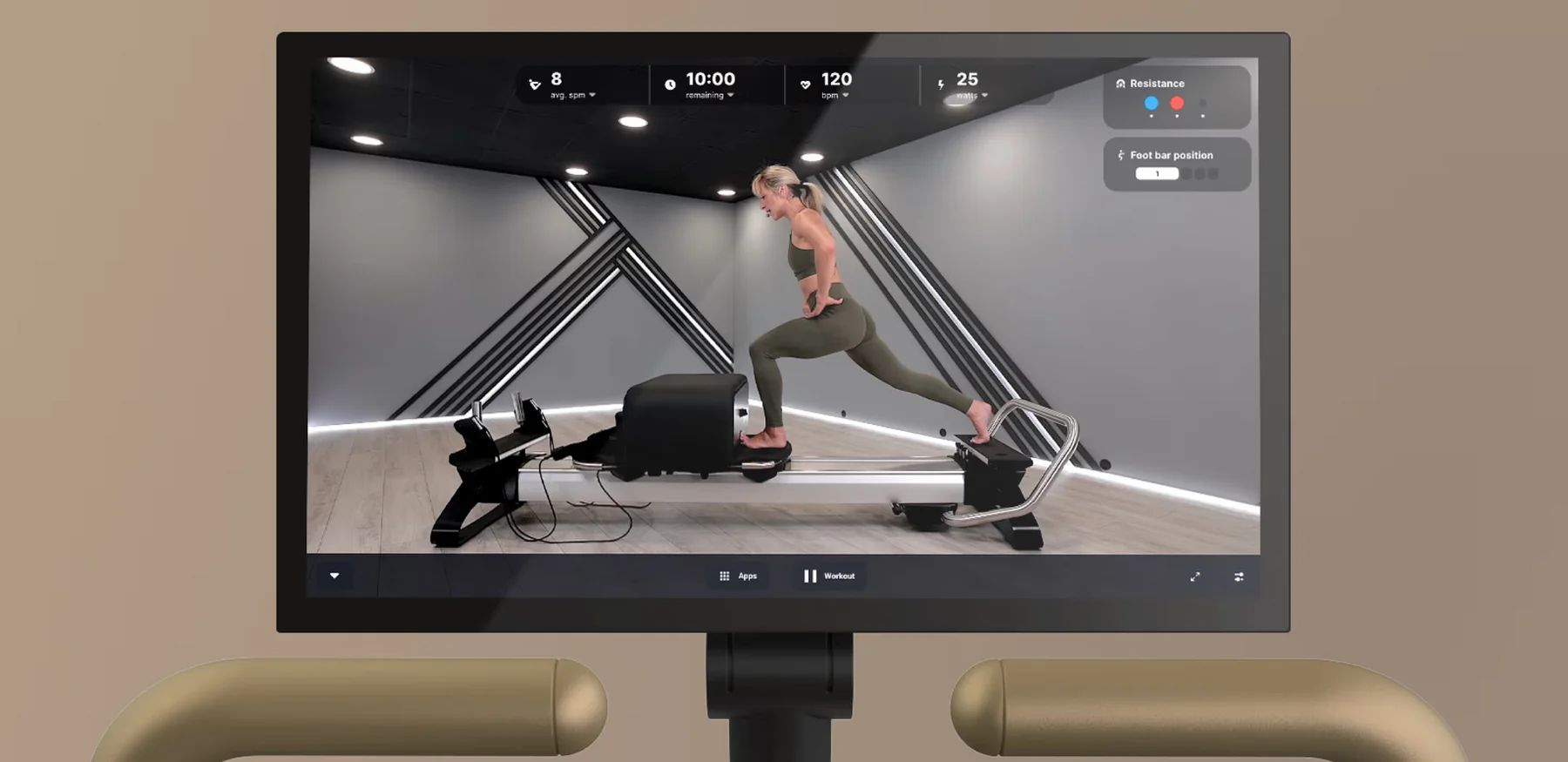
- Touchscreen: a 24-inch HD touchscreen that you can tilt, rotate and swivel to the side. This lets you see the classes even when doing exercises next to the equipment.
- Guided classes: With iFIT, over 200 Pilates sessions, more than 75 of them on the reformer, also in German.
- Metrics: The Smart Spine™ measures cadence, power and estimated calorie burn in real time.
In return, a smart reformer needs more: a power socket, Wi-Fi and, on the Ultra 1 Reformer, a free iFIT account. The classes and features require a paid iFIT Pro membership. It renews automatically unless you cancel beforehand.
 NordicTrackNordicTrack Ultra 1 Reformer€7,990 incl. VAT
Smart in the studio too
There are also smart reformers for studios, practices and hotels. The NordicTrack Reformer RX-S has four resistance buttons from 10 to 65 kg, an adjustable footbar with seven positions and also a tilting 24-inch touchscreen. Your clients choose the class directly on the screen, even without a trainer on site. After the class, you press all the buttons: the carriage is then locked and the equipment is secured against unauthorised use. Business customers buy the Reformer RX-S via FITVYR® Pro.
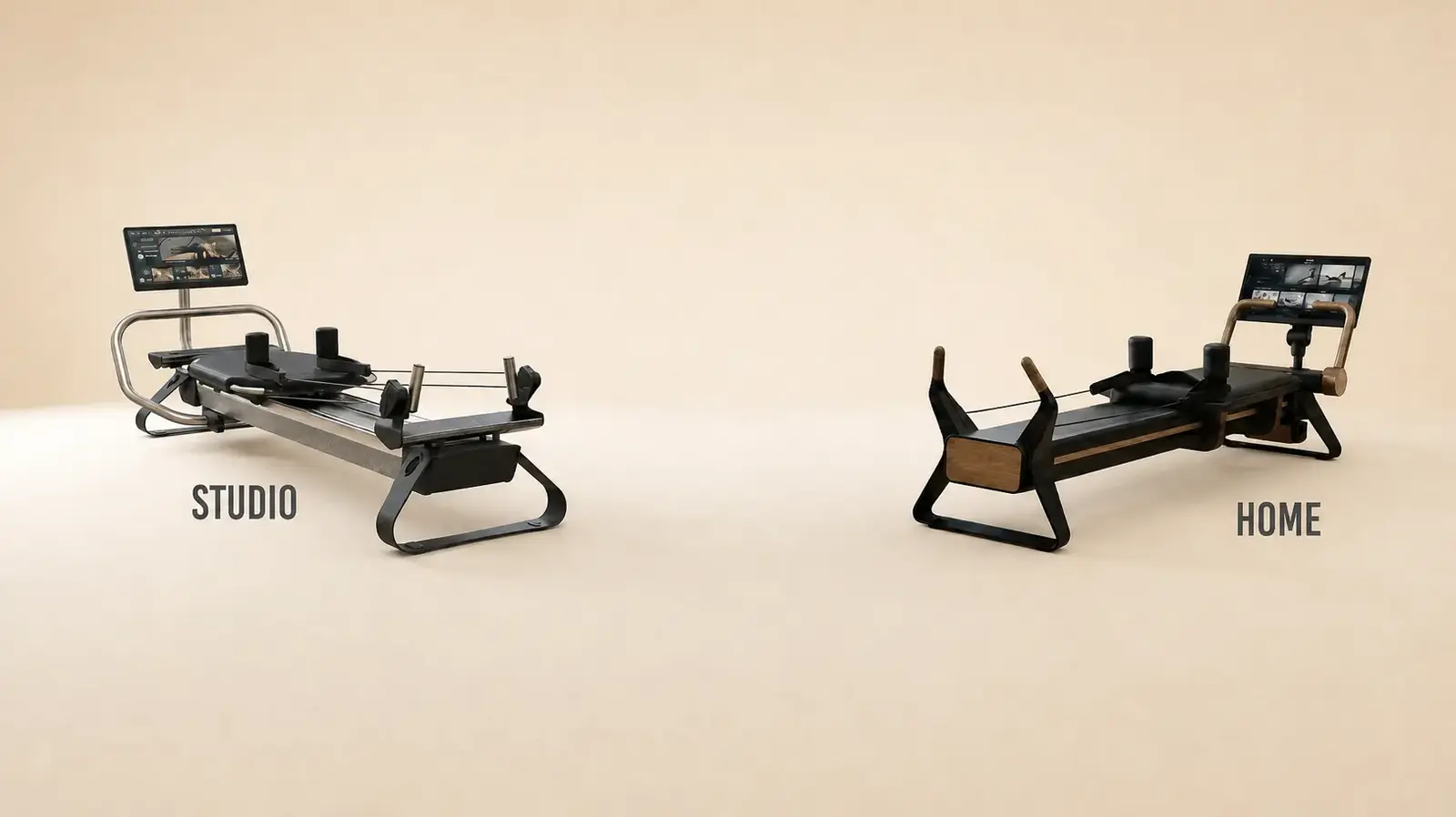
The difference at a glance
- Resistance: classic, re-hooking springs by hand; smart, at the push of a button.
- Guidance: classic, a trainer, video or your own knowledge; smart, classes on the touchscreen.
- Metrics: classic, none; smart, for example cadence, power and calories.
- Requirements: classic, just space; smart, also a power socket, Wi-Fi and usually a membership for the classes.
Which reformer suits you?
A classic reformer is a good fit if you already know Pilates well, work with a trainer or deliberately want to train without a screen.
A smart reformer is a good fit if you want to train at home without a trainer, switch quickly between exercises and be guided by classes. This is a big advantage, especially for beginners: you do not need to know which spring belongs to which exercise.
We compare our two smart reformers on the Buy a Pilates reformer page. You can read whether a reformer is worth it for your home in the guide Pilates reformer for the home: is it worth it?
Frequently asked questions
Can a smart reformer be used without a membership?
To operate the Ultra 1 Reformer, you need a free iFIT account, acceptance of the terms and Wi-Fi. Classes and features require a paid iFIT Pro membership.
Is a smart reformer harder to use?
No, if anything it is easier. You set the resistance at the push of a button, and the classes show you every exercise.
Can I see a reformer before buying?
Yes. In the free live consultation, we show you the Ultra 1 Reformer by video and explain the differences from the Reformer RX-S.